# Welcome to Bit Bank

Using a combination of Privacy, Tech, Finance and Security. You can privately  Trade, Invest, Shield and Vault your Assets with confidence!

Clients are empowered by  Zero Knowledge Proof, Military Data Encryption and Swiss Data Protection Laws and the safest Data Centre in Europe... The Swiss Fort Knox.

CUSTODY / INVESTING / TRADING / SHIELD  and VAULT ASSETS

* xTrade -  A Privacy Exchange and Derivatives and Futures trading platform with, the lowest fees in the market and up to x25 times trading leverage!
* xVault - Offering clients a Discreet Digital Assets Custody solution in our Swiss Fort Knox Vaults.
* xShield - Shielding of Assets - Using Zero Knowledge Proof technology we can create secure X Assets and vault them in our Swiss Fort Knox vault.
* xInvest - Hedge Funds,  Fixed Returns, Metals and Venture Capital Investments. Wealth Management - Securing generational assets for Family Offices, Foundations, and High Net Worth Individuals.
* X Assets - Anonymous Synthetic  Derivative Trading Asset Creation.

<br>


# xInvest

Serving clients a suite of investment products, fully private and decentralized.

<figure><img src="https://2309448231-files.gitbook.io/~/files/v0/b/gitbook-x-prod.appspot.com/o/spaces%2FszS77kAppjUJoei2wnA2%2Fuploads%2Fv5cP64hbLaZZHdm2pZR7%2FX-Invest-1.png.webp?alt=media&amp;token=432701a4-17f9-4626-bbb5-82be986e2c4b" alt=""><figcaption></figcaption></figure>

[Precious Metals Trading](/the-bit-bank-ecosystem/xinvest/precious-metals-trading)

[Hedge Funds](/the-bit-bank-ecosystem/xinvest/hedge-funds)

[Staking and Rewards](/the-bit-bank-ecosystem/xinvest/staking-and-rewards)


# Precious Metals Trading

Precious Metals Trading - Gold, Silver, Platinum.

**Token Sizes and Pricing**

Each token represents 1 gram of pure gold. It will be priced at the prevailing rate for gold on international markets.

**Vaulting and Storage**

Physical bars are stored in the Switzerland in internationally accepted vaults. They are stored separately from other gold in the vault.

**Metal Backing**

All metal tokens are 100% backed by real physical metal. The mtealcomes in standardized 1 kg - 15K kg bars of 999.9 purity from Swiss recognized refineries.

**Conversion of Metal Tokens**

Token holders have the right to convert their tokens to physical metal via PGP. Any investor holding coins equivalent to 1 kg or more of gold can cancel their tokens in exchange for equivalent gold in multiples of 1000 tokens (1 kg gold).

**Digital Custodian**

Gold tokens are issued with an approved digital custodian. The custodian will maintain records to offer accountability and an audit trail of all transactions in your wallet


# Hedge Funds

Our Hedge Fund Vaults are a new breed of digital Hedge Funds on our EVM compatible blockchain, composed of a mixture of Funds to match Investment Objectives or requirements using Venture Capital and capital investments using a Global Macro Strategy and market arbitrage we carefully select the Industries, Technologies, Companies and Protocols in the Blockchain space that we feel have a great investment potential, our funds are best suited for investors with a medium to high degree of risk tolerance.The key risks of our Funds is the full exposure to the global crypto Currency Markets however we feel this exposure and risk is to be greatly rewarded and is mitigated by our Monitoring of current eco-global and political situations. &#x20;

Our portfolio are made up of a large weighting of large market capitalisation, high yield crypto currencies and trading strategies using companies and strategies that have been approved by our Advisory Board and Research Team.&#x20;


# Staking and Rewards

Epoch Rewards are set in the Governance of the Bit Bank protocol by BNKD holders.

Profits and Rewards are earned from&#x20;

* Staking
* The creation of Derivative X Assets for trading.
* Expansion profits from X Assets LP (liquidity pool) providing to other businesses.
* Exchange and Futures liquidity providing and rewards from the transaction Fees.


# X Assets

X Assets are tokens that provide exposure to a variety of underlying assets. They can be traded using the BNKD protocol's novel collateral pooling model. The BNKD collateral providers receive a fee generated by X Asset transactions. Using ZK Snark Data Oracles for the creation of assets on our Zero Knowledge privacy network.


# xShield

Encrypt your money, Shield your assets, and Break the Chain.

<figure><img src="https://2309448231-files.gitbook.io/~/files/v0/b/gitbook-x-prod.appspot.com/o/spaces%2FszS77kAppjUJoei2wnA2%2Fuploads%2FqBKt8cpGQToT25sf7KV9%2FXsheild-top.png.webp?alt=media&amp;token=aeceef3e-e0c7-4947-b5b7-71f4be293ba1" alt=""><figcaption></figcaption></figure>


# Anonymous Assets

Bit Bank network allows for the issuance and transfer of anonymous assets with an arbitrary number of parameters. These tokens are anonymous, relying on zero-knowledge proofs to ensure validity without revealing any other information.

New tokens are created and destroyed every time you send an anonymous transaction. To send a transaction on Bit Bank, you must first issue a credential that commits to some value you have in your wallet. This is called the **Mint** phase. Once the credential is spent, it destroys itself: what is called the **Burn.**

Through this process, the link between inputs and outputs is broken.

![](https://darkrenaissance.github.io/darkfi/architecture/transaction.png)

### Mint <a href="#mint" id="mint"></a>

During the **Mint** phase we create a new coin C , which is bound to the public key P. The coin C is publicly revealed on the blockchain and added to the merkle tree, which is stored locally on the Bit Bank wallet.

We do this using the following process:

Let v be the coin's value. Generate random rC​, rV​ and serial ρ.

Create a commitment to these parameters in zero-knowledge:

$$
C=H(P,v,ρ,rC​)
$$

Check that the value commitment is constructed correctly:

$$
v>0V=vG1​+rV​G2​
$$

Reveal C and V. Add C to the Merkle tree.

### Burn <a href="#burn" id="burn"></a>

When we spend the coin, we must ensure that the value of the coin cannot be double spent. We call this the *Burn* phase. The process relies on a N nullifier, which we create using the secret key x for the public key P. Nullifiers are unique per coin and prevent double spending. R is the Merkle root. v is the coin's value.

Generate a random number rV​.

$$
N=H(x,ρ)
$$

Check that the secret key corresponds to a public key:

$$
P=xG
$$

Check that the public key corresponds to a coin which is in the merkle tree R:

$$
C=H(P,v,ρ,rC​)C∈R
$$

Check that the value commitment is constructed correctly:

$$
v>0V=vG1​+rV​G2​
$$

Reveal N, V and R. Check R is a valid Merkle root. Check N does not exist in the nullifier set.

The zero-knowledge proof confirms that N binds to an unrevealed value C, and that this coin is in the Merkle tree, without linking N to C. Once the nullifier is produced the coin becomes unspendable.

### Adding values <a href="#adding-values" id="adding-values"></a>

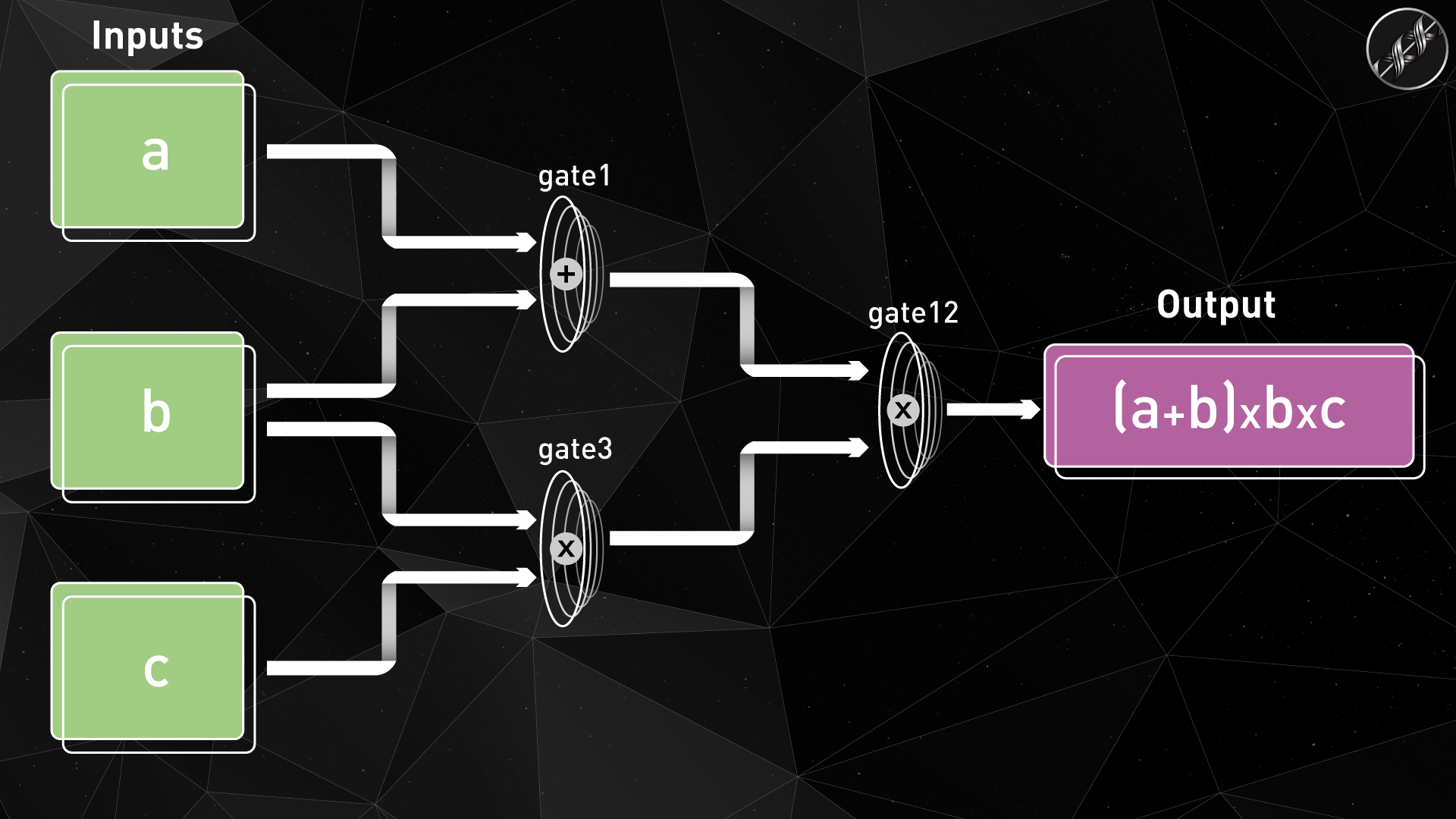
Assets on Bit Bank can have any number of values or attributes. This is achieved by creating a credential C and hashing any number of values and checking that they are valid in zero-knowledge.

We check that the sum of the inputs equals the sum of the outputs. This means that:

$$
B=∑Vin​−∑Vout​
$$

And that B is a valid point on the curve G2​.

This proves that B=0G1​+bG2​=bG2​ where b is a secret blinding factor for the amounts.

## Diagram <a href="#diagram" id="diagram"></a>

![](https://darkrenaissance.github.io/darkfi/architecture/diagram-dkzk.png)


# xTrade

Private Exchange, Futures and Derivatives Trading  Platform

<figure><img src="https://2309448231-files.gitbook.io/~/files/v0/b/gitbook-x-prod.appspot.com/o/spaces%2FszS77kAppjUJoei2wnA2%2Fuploads%2F9slHPDy76RvNBJ6EI4b8%2FX-Trade.png.webp?alt=media&amp;token=cef08f6c-706a-49b1-8b55-6506c546261a" alt=""><figcaption></figcaption></figure>


# Exchange Platform

Bit Bank is a popular cryptocurrency decentralized exchange that offers a Strict Privacy Policy to its users making a great choice for those who prioritize privacy.

Our exchange boasts a user-friendly interface, making it easy for both new and experienced traders to use. It supports a wide range of cryptocurrencies, including Bitcoin, Ethereum, Litecoin, and Ripple, as well as numerous privacy based coins.

<figure><img src="https://2309448231-files.gitbook.io/~/files/v0/b/gitbook-x-prod.appspot.com/o/spaces%2FszS77kAppjUJoei2wnA2%2Fuploads%2FVXE5GR1Yh3iZCcuTc289%2Fspot%20Exhange.png?alt=media&amp;token=59a16cfa-ce88-4260-9160-efd11314d2ae" alt=""><figcaption></figcaption></figure>

One of the key features that sets us apart from other exchanges is our Swiss Data Centre and Strict Privacy Policy. This allows users to trade cryptocurrencies without the need to provide any personal information, making it an ideal choice for those who want to maintain their privacy.

We are known for our excellent security measures. We use industry-leading security protocols, including multi-factor authentication and cold storage for user funds, to ensure that users' assets are protected from potential hacks or cyber attacks.

We also offer some of the best exchange rates in the market, making us one of the most cost-effective choices for traders.&#x20;


# Futures Trading Platform

<figure><img src="https://2309448231-files.gitbook.io/~/files/v0/b/gitbook-x-prod.appspot.com/o/spaces%2FszS77kAppjUJoei2wnA2%2Fuploads%2Fo7lh3BQSUJsgZfvkWyC3%2FExchange%20screenshot.png?alt=media&amp;token=f75f76f2-b147-4ddf-8ca2-0cf73d69095d" alt=""><figcaption></figcaption></figure>


# XBNK - Token

Privacy Empowering DeFi, Break the Link and Secure Your X Assets confidentially.

<figure><img src="https://2309448231-files.gitbook.io/~/files/v0/b/gitbook-x-prod.appspot.com/o/spaces%2FszS77kAppjUJoei2wnA2%2Fuploads%2FP6cC92u4FyyGtBMkgT8V%2F3.svg?alt=media&amp;token=b45b63d8-710c-413c-9bfa-eb6565088f64" alt=""><figcaption></figcaption></figure>

The XBNK Token uses the latest in cryptographic encryption techniques zkSnark privacy is able to shield the users asset and put privacy on the input and output of data, thus giving a complete Privacy shield around transactions.

XBNK will burn every coin that is used after each transfer, and mint a new coin with a new block for anonymity and security purposes,

XBNK is a Hybrid Private Blockchain advanced XDPoS Algorithm, transacting at 2000 Transactions per Second, giving users Instant and Private Transactions.

XBNK allows the user to access the Web3 Services, our Decentralised Encrypted Exchange, Futures and Derivatives Platform, Invest into Bonds and Funds, which enables you Cross Bridge Access to Centralised Financial Instruments.

Break the link, secure your assets and turn to XBNK today!

Download our PDF here.

<figure><img src="https://2309448231-files.gitbook.io/~/files/v0/b/gitbook-x-prod.appspot.com/o/spaces%2FszS77kAppjUJoei2wnA2%2Fuploads%2FQOxn4uBKnXMboJxToagW%2FA4%20-%204.jpg?alt=media&amp;token=43216f51-ae53-4850-b56e-9bb643650d6d" alt=""><figcaption></figcaption></figure>


# xVault

Cold Storage of assets in the Swiss Fort Knox Vaults.

<figure><img src="https://2309448231-files.gitbook.io/~/files/v0/b/gitbook-x-prod.appspot.com/o/spaces%2FszS77kAppjUJoei2wnA2%2Fuploads%2FaRcZ9lBhB59RpZklT39q%2Fswiss-fort.png.webp?alt=media&amp;token=725c199c-c9ee-40d0-ad07-20730c43570b" alt=""><figcaption></figcaption></figure>


# Digital Asset Custodian

Your data is safe and sound in the safest data centre in Europe deep in the Swiss mountain land....

<figure><img src="https://2309448231-files.gitbook.io/~/files/v0/b/gitbook-x-prod.appspot.com/o/spaces%2FszS77kAppjUJoei2wnA2%2Fuploads%2FM4xIt8aJsFoHims58fIS%2FSecuritas.jpg?alt=media&amp;token=b829d7c5-7fc8-4ca2-855d-26d211c3d5c3" alt=""><figcaption></figcaption></figure>

Our Discreet Custodian service is a leading Swiss cryptocurrency Custody solution, offering secure and reliable storage solutions for cryptocurrency investors. As a cryptocurrency custodian, we provide institutional-grade security measures to safeguard our clients' digital assets.

<figure><img src="https://2309448231-files.gitbook.io/~/files/v0/b/gitbook-x-prod.appspot.com/o/spaces%2FszS77kAppjUJoei2wnA2%2Fuploads%2Fn65f0ZrsUPXoCtoDOisw%2FControlled%20Server.jpg?alt=media&amp;token=338a912e-ac97-46ba-85f3-0756ac344d05" alt=""><figcaption></figcaption></figure>

With the increasing popularity of cryptocurrencies, the demand for a reliable crypto custodian has grown tremendously. Our Discreet Custodian service is designed to provide the highest level of security to clients' digital assets, ensuring that their investments are safe from cyber attacks, theft, and other potential risks.

As a Swiss crypto currency custodian, we operate under our strict privacy framework providing clients with peace of mind that their assets are being held in a secure and private manner.

Our Discreet Custodian service also offers features such as multi-signature cold storage, which adds an additional layer of security to clients' digital assets. The service also provides 24/7 monitoring and support to ensure that clients' assets are always protected.

<figure><img src="https://2309448231-files.gitbook.io/~/files/v0/b/gitbook-x-prod.appspot.com/o/spaces%2FszS77kAppjUJoei2wnA2%2Fuploads%2FIvR5dxwp2g9wyuFvSUhP%2FFortKnox.jpg?alt=media&amp;token=3794f930-e5e0-4f9b-8de8-a6b80fefec96" alt=""><figcaption></figcaption></figure>

Download our PDF here

<figure><img src="https://2309448231-files.gitbook.io/~/files/v0/b/gitbook-x-prod.appspot.com/o/spaces%2FszS77kAppjUJoei2wnA2%2Fuploads%2FY9TljfNy4kBQY1JMJjSL%2FA4%20-%205.jpg?alt=media&amp;token=b26d09f2-d32b-48e6-be82-130f021e819a" alt=""><figcaption></figcaption></figure>


# Swiss Fort Knox Vault

The most secure Data Centre and Vault in Europe.

<figure><img src="https://2309448231-files.gitbook.io/~/files/v0/b/gitbook-x-prod.appspot.com/o/spaces%2FszS77kAppjUJoei2wnA2%2Fuploads%2FIvR5dxwp2g9wyuFvSUhP%2FFortKnox.jpg?alt=media&amp;token=3794f930-e5e0-4f9b-8de8-a6b80fefec96" alt=""><figcaption></figcaption></figure>

### HOW SECURE IS THE SWISS FORT KNOX?

The SWISS FORT KNOX offers the best  protection against any known threat:

• Risk of own personnel

• Erosion of own precautions

• Theft, vandalism

• Elementary & environmental damage

• IT access problems (quarantine)

• Terror / Sabotage

Characteristics:

• Underground “zero-risk” infrastructure

• Highest protection against nuclear, biological or chemical attacks

• Full EMP (electro magnetic pulse) protection

• Strict access control, constantly accompanied by security personnel

• Scanning room for commodities

• External video supervision with automatic detection

• Security zones with explosion proof separations and bullet proof lock gates

• Face recognition technology, video surveillance of any movement

• Automatic control of visitors

• 24h surveillance, ensured by a civil and military concept

• Generators will guarantee an autonomous operation of several weeks

• Battery power for 24h

• Transformation room for production of quality power

• Climate control with rehydration for ideal, constant conditions

• Various micro-segmented air inlets at hidden locations

• Atmospheric over pressure to prevent gas from entering the facility, full ABC protection

• The high performance cooling system utilizes an underground lake to cool down all IT installations

<figure><img src="https://2309448231-files.gitbook.io/~/files/v0/b/gitbook-x-prod.appspot.com/o/spaces%2FszS77kAppjUJoei2wnA2%2Fuploads%2Fn65f0ZrsUPXoCtoDOisw%2FControlled%20Server.jpg?alt=media&amp;token=338a912e-ac97-46ba-85f3-0756ac344d05" alt=""><figcaption></figcaption></figure>


# Exchange Platform

Swiss served, privacy based.

Our decentralized Spot Exchange is dedicated in working across on ISO20022 cetfied network in order to maintain privacy and to shield and trade assets.

<figure><img src="https://2309448231-files.gitbook.io/~/files/v0/b/gitbook-x-prod.appspot.com/o/spaces%2FszS77kAppjUJoei2wnA2%2Fuploads%2FVXE5GR1Yh3iZCcuTc289%2Fspot%20Exhange.png?alt=media&amp;token=59a16cfa-ce88-4260-9160-efd11314d2ae" alt=""><figcaption></figcaption></figure>


# Futures

Trade synthetic perpetual futures on Bit Bank

<figure><img src="https://2309448231-files.gitbook.io/~/files/v0/b/gitbook-x-prod.appspot.com/o/spaces%2FszS77kAppjUJoei2wnA2%2Fuploads%2Fo7lh3BQSUJsgZfvkWyC3%2FExchange%20screenshot.png?alt=media&amp;token=f75f76f2-b147-4ddf-8ca2-0cf73d69095d" alt=""><figcaption></figcaption></figure>

Bit Bank is a decentralized Perpetual Futures platform:

* **Leverage**: Trade assets with up to 25x leverage.
* **Near Instant Transactions:** Having deployed Futures on XDC, traders on Bit Bank enjoy fast transactions and significantly reduced network gas fees.
* **Liquidity**: Achieving the same level of deep liquidity as centralized exchanges by using pooled liquidity made available by BNKD.
* **Assets**: Starting with crypto and expanding to real-world assets.
* **Advanced Orders:** Get access to limit and stop market orders.

**You can access Futures here** :point\_down:

{% hint style="info" %}
For an in-depth overview of the Bit Bank Futures implementation&#x20;
{% endhint %}


# Basics of Futures Trading

Learn the basics on how to trade Futures on Bit Bank

Decentralized Futures on Bit Bank allow traders to get exposure to a market without actually owning the underlying asset. Futures are accessible on a derivatives trading platform like Bit Bank. Crypto assets trade  24/7, and so do Futures.

Futures traders should familiarize themselves with a handful of essential concepts. These concepts are critical to understanding the power of leverage. Critical points outlined below are essential when dealing with Futures and require traders to know how they affect each trade.

### Leverage

Leverage is the most common reason traders are attracted to Futures and is a capital multiplier. Trading with leverage allows for more advanced trading methods.

For example, to buy 1 ETH on a spot market, you'd need about 1300 USD (at the time of writing). With leverage, you can open the same ETH position with a fraction of the required spot market capital. The higher the leverage a trader uses, the less capital is needed to open the intended position. Leverage is only available when trading Futures.&#x20;

### Initial margin

An **initial margin** is needed to enter into a Futures position. Initial margin is the percentage of a futures position notional value that must be covered by cash or collateral.

### Maintenance margin

The maintenance margin is the minimum amount that traders need to hold in their margin account to keep their position(s) open. When a traders margin balance becomes equal to their maintenance margin, their position gets liquidated, meaning a total loss of funds in the margin account.

{% hint style="info" %}
It is important to note that the maintenance margin will directly affect the liquidation price. To keep from being liquidated, it is highly recommended to close your positions before the collateral falls below the maintenance margin.
{% endhint %}

### Liquidation

Futures traders can be forced to exit positions when losses result in their margin balance becoming equal to their maintenance margin requirements. When this happens involuntarily and automatically, losing trades are liquidated.

### Funding

As the BNKD debt pool is the counter-party to every position, Bit Bank requires a mechanism to incentivize the market skew to remain balanced (equal long/short open interest). The funding mechanism has been designed to incentivize a balance of open interest on each side of the market. Positions on the crowded side of the market will be charged funding, while positions on the uncrowded side will receive funding. Funding rates can have unfavorable effects on a traders position. For instance, funding rates may surge when the market is consistently moving in the same direction as a traders position, making it costly for traders to hold long-term.

### **Isolated Margin**

Isolated Margin is **the margin balance allocated to an individual assets contract**. Isolated Margin mode allows traders to individually manage their risk and collateral made available to individual positions/assets.

### Cross Margin

[Cross Margin accounts](broken://pages/e6TdrkOL3zfVRmUOXDdI) are a unique offering that allows users to trade any market by depositing into a single margin account. By default, all Bit Bank Futures contracts are isolated margin markets, requiring users to deposit and withdraw separately for each asset they wish to trade. With cross margin accounts, users can seamlessly trade different markets with fewer transactions and less hassle.

### Pros&#x20;

* Trading Futures allows one to profit from both the up and downside of an asset.
* Futures allow for the use of leverage. This is the most sought-after advantage as traders can execute orders at a lower cost compared to the matching spot market price.
* It allows for advanced trading methods.

### Cons

* The high volatility in the crypto space can be a blessing or an agony. Market movement is something no one can guarantee. Due to the leverage involved, Futures is one of the most challenging trading tools. Traders, in turn, should trade them with a strong risk management strategy.
* Futures allow a trader to speculate on asset prices. Becoming familiar with the basics of Futures is a must. Futures trading can be lucrative if you apply risk management to avoid non-proportional losses.

In short, you should strategize and do your research before trading Futures and understand both their advantages as well as their risks. Trading Futures **can result in significant financial loss**, keep this in mind at all times:

{% hint style="warning" %}
Never invest more than you can afford to lose!
{% endhint %}


# Spot vs Futures

Explaining the differences between Spot and Futures Trading

### What is the difference between Spot and Futures Trading?

{% hint style="info" %}

* **Spot**:  Buy/sell crypto for immediate delivery
* **Futures**:  Buy/sell leveraged derivatives that represent the value of an asset
  {% endhint %}

#### Spot Market Trading

In a spot market, assets are being traded with instant delivery. This implies that those assets, for example, ETH, BNKD, or XBNK, are exchanged directly between market participants. Buyers and sellers have direct ownership of the underlying assets and will be able to utilize them in whatever way they want.

**Futures Market Trading**

In a traditional Futures market, the delivery of underlying assets and Futures contracts are settled on a predetermined future date, instead of directly trading assets (as in a spot market).&#x20;

**Perpetual Futures Trading**

Perpetual Futures contracts allow traders to speculate on the future price of a given asset by buying (going long) or selling (going short) perpetual futures contracts. Unlike typical futures, perpetual Futures do not expire and remain effective until the trader closes their position.


# Jargon

**Live Price:** The price is tracked from a centralized reporting entity. This price will often divert from the exchange oracle price.

**Oracle Price:** Bit Bank utilizes a decentralized ZK Snark XDC Oracle to price its assets. These oracles provide up-to-date token prices data to smart contracts on Ethereum.

**Unrealized P\&L:** The unrealized P\&L is based on the difference between the average entry price and oracle price. It is a reference P\&L of a position.&#x20;

**Realized P\&L*****:*** This is based on the difference between the entry price and close price of a position. Trading Fees and Funding Fees are also included in the realized P\&L.

**Liquidation:** To keep the positions open, traders are required to hold a percentage of the value of their position, i.e., the maintenance margin percentage. If a trader fails to fulfill the maintenance requirement, his/her position will be flagged for liquidation, and any margin will be lost.

**Initial margin:** Is the percentage of the purchase price of a future position that must be covered by cash or collateral when leverage trading.

**Leverage:** Leverage refers to using borrowed capital to make trades. Leverage trading applied a multiplier to your buying or selling power, allowing you to trade larger amounts.

**Funding Rate:** Funding rates are periodic payments to or from traders depending on their trade direction. These rates are used by Bit Bank to balance the skew of the Open Interest on Bit Bank, be aware of these rates because they impact the daily holding cost of a perpetual contract position.

**Open Interest:** Open interest is the total number of outstanding derivative contracts, futures that have not been settled. Open interest equals the total difference of bought and sold contracts, not the total of both added together

**Volume:** Volume is the total notional value being traded between market participants.

**Notional Position Size:** The notional value is the total amount of an asset's underlying value at its spot price. The notional value distinguishes between the amount of money invested and the amount of money associated with the whole position. The notional value is calculated by multiplying the units in one contract by the spot price.


# Funding Rates

Whenever the market is imbalanced in the sense that there is more open interest on one side, BNKD holders take on market risk. At a given skew level, BNKD holders take on exposure equal to K (p2−p1) as the price moves from p1 to p2.

Therefore a funding rate is levied, which is designed to incentivize balance in the open interest on each side of the market. Positions on the heavier side of the market will be charged funding, while positions on the lighter side will receive funding. Funding will be computed as a percentage charged overtime against each position’s notional value, and paid into or out of its margin. Hence funding affects each position's liquidation point.\ <br>


# Liquidation

Liquidations are a part of leveraged trading. When traders open positions with leverage, they are using collateral (margin) to borrow money from the Bit Bank Debt pool to purchase an asset. This allows traders to trade with more capital than they actually have. If the value of your position falls and losses begin to approach the value of your initial collateral a Liquidation will take place.&#x20;

> For example, if you open a 10x leverage position using $500 xUSD, your total position size will be worth $5,000 xUSD. Of that position's value $4500 is borrowed and $500 xUSD (margin) belongs to the trader.

Bit Bank enforces a minimum ratio between the position's value and the margin, called a *maintenance margin*. On Bit Bank, the maintenance margin is %.

In our previous example, if your position's value drops to 400 xUSD, it will be liquidated.\
\
Once a position's remaining margin is exhausted, it must be closed in a timely fashion, so that its contribution to the market skew and to the overall debt pool is accounted for as rapidly as possible, necessary for accuracy in funding rate and minting computations.

As price updates cannot directly trigger the liquidation of insolvent positions, it is necessary for keepers to perform this work by executing a public liquidation function. However, as opposed to the usual liquidations pattern, no capital is required for the liquidator - only submitting the transaction specifying the account to be liquidated.

In order to incentivize the keepers, the liquidation penalty proportional to the position size of the account will be paid to the keeper. The penalty will have a minimal size to ensure that transaction costs are covered and small accounts liquidation is also profitable (to prevent small accounts bloat). The initial setting for the penalty/incentive will be 35 basis points (of position size).

Additionally, because a price update might cause an account to have a negative margin after accounting for the liquidation incentive, an additional proportional margin buffer will be used when calculating the liquidation threshold margin and price. The buffer will be set such that on average the remaining margin on liquidation after deducting the penalty is close to 0, but positive. This is to prevent the debt pool from leaking value in these cases. The initial setting for the buffer will be 25 basis points (of notional position size).

The liquidation margin will be computed by summing both the liquidation incentive payable to a keeper, and the buffer (payable to the fee pool if positive).\ <br>


# Futures on Bit Bank

Trade perpetual Futures on Bit Bank

Bit Bank currently offers xUSD-margined Futures. These Futures contracts offer the following:

* Settlement in xUSD-pegged assets are denominated and settled in xUSD.
* Expiration: Perpetual
* Pricing: Each Futures contract specifies the base assets quantity delivered for a single contract, also known as "Contract Unit". For instance, BTC/xUSD or ETH/xUSD Futures contracts represent only one unit of its respective base asset, similar to spot markets.

### Advantages of xUSD-margined contracts

xUSD-margined contracts are linear Futures quoted and settled in xUSD. One of the key benefits of xUSD settlement is that traders can easily calculate their returns. This makes xUSD-margined contracts more intuitive. \
\
For example, when you make 500 xUSD in profit, you can easily estimate that the profit is worth approximately $500 - since the value of 1 xUSD is pegged closely to 1 USD. Additionally, a universal settlement currency, such as xUSD, provides more flexibility. You can use the same settlement currency across various Futures contracts.

This eliminates the need to buy the underlying coins to fund Futures positions. You will not incur additional fees as there is no additional conversion required when trading with xUSD. In times of elevated volatility, xUSD-margined contracts help reduce the risk. Traders won't need to worry about hedging their underlying collateral exposure.


# Isolated Margin

Isolated Margin is **the margin balance allocated to an individual assets contract**. By default, all Bit Bank futures contracts are isolated markets, requiring users to deposit and withdraw separately for each asset they wish to trade. With Bit bank [cross-margin account](broken://pages/e6TdrkOL3zfVRmUOXDdI), users can seamlessly trade different markets with fewer transactions and less hassle.


# Trading Futures on Etherscan

On-chain perpetual futures have the benefit of allowing users to execute trades directly through the futures contracts if they are unable to access the Bit Bank frontend, safeguarding them from not being able to interact with the market.

In the event Bit Bank becomes unavailable, you can still manage positions directly on etherscan. Each futures market has a corresponding smart contract that can be accessed regardless of the state of Bit Bank, with an up-to-date list of contracts available at docs.bit-bank.io.

The most likely need for this is the ability to close a position, which we will cover first. These steps must be completed on every assets contract with an open position you wish to interact with.

### Closing your position&#x20;

* Head over to an assets writeContract tool on etherscan (We are using the ETH futures market contract found [here](https://optimistic.etherscan.io/address/0xf86048DFf23cF130107dfB4e6386f574231a5C65#writeContract).)
* Connect your wallet, and call the `#2 close position` function.
* Withdraw available xUSD by using the `#13 WithdrawAllMargin` function.

Steps:

1. &#x20;Connect the wallet that holds the open perps position on the assets contract page on etherscan.

   <figure><img src="https://lh6.googleusercontent.com/Dr54Tz51EUm0jKvXQHHjn4qieHLjMLdy-7ifQ-tGgJIGj5KGhVzO26JsihjlwYPIHX6MSD-HCNTYieHQRpjGmdjN3lAmLqwXuXB4Itn0fxnFiNfvYw0pv0WzjQA-ljUy9V46vzJU6ezKDSmoJ6FnlaSQr0sXMPZ3Vb5diPG5pwoPWd5V90yYbWpYuw" alt=""><figcaption></figcaption></figure>
2. When connected, the `connect to Web3` button will display connected as well as the connect eth address. (Make sure you are connected to the correct wallet)
3. Users will see a number of functions available to them for our purposes, we will focus on the `#2 close position function` & `#13 WithdrawAllMargin function`.
4. To close a position, call function `2. closePositions`, select `write` and submit the transactions through metamask. After clicking the `Write` button and confirming your transaction on Metamask, the position will be closed.
5. Next, you’ll be able to withdraw all of your margin within the specified contract by calling function `13. withdrawAllMargin` selecting `write` and submitting the transaction. After clicking the `Write` button and confirming your transaction on Metamask, the xUSD will be sent back to your wallet. Repeat these steps for every asset with an open position you wish exit. Available futures contracts can be found at [Broken mention](broken://pages/8hbMOk5auCAAqjcLELZG) .

### Querying Position Information

* Head over to your assets readContract tool on etherscan (We are using[ ETH](https://optimistic.etherscan.io/address/0xf86048DFf23cF130107dfB4e6386f574231a5C65#readContract)).&#x20;
* Have your ETH address ready to paste&#x20;

Steps:&#x20;

1. Select a read function that corresponds to the position information you wish to retrieve. We will cover a few like the current oracle price, position liquidation price, and a few others.&#x20;
2. You can query the current asset oracle price by calling the function `#3 AssetPrice` and selecting `query`. This will query the assets contract for the current oracle price and return a uint256 value. Since Ethereum works on 18 decimal places, we will need to count back 18 places to get a usable number. Turning 1341680000000000000000 into a current Ethereum price of $1341.68.
3. You can query your open positions liquidation price by calling function `#13 LiquidationPrice`, entering your ETH address, and selecting `query.`This will return a uint256 value. Counting back 18 decimal places (Ethereum works with 18 decimal places), we see the position will be liquidated when the price of Ethereum reaches $132,235.08.

All position stats can be queried in a similar fashion in case the Bit Bank frontend becomes inaccessible.


# Fee Structure

Bit Bank fees explained.

Bit Bank is built upon the $BNKD protocol. In order to enable the exchange of synthetic assets, an [exchange fee](#exchange-fees) is charged by BNKD whose fees are sent to the fee pool for $BNKD  stakers to claim.

In addition to the exchange fee, a [dynamic fee](#dynamic-fees) is in place which kicks in during times of high market volatility in order to neutralize front-running opportunities and protect stakers.

### Exchange Fees

Exchange fees are charged when a trader opens or closes a trade through the Bit Bank platform. These fees are sent to the fee pool, where they are available to be claimed by BNKD stakers each week. Exchange fees may vary depending on a selected market & network. The most current fees are prominently displayed within the Bit Bank trading platform while trading or within these docs at Bit Bank.

{% hint style="info" %}
Basis Points (BPS) are a unit of measurement equal to 1/100th of 1 percent commonly used in financial markets. Examples can be foud below. Find actual exchange fees within Bit Bank while trading.
{% endhint %}

| Percentage | .bps   |
| ---------- | ------ |
| 0.01%      | 1 bps  |
| 0.40%      | 40 bps |

{% hint style="danger" %}
All fees are charged against the notional position size during order execution.&#x20;
{% endhint %}

### Cross-Margin Account Fees

Bit Bank fees are charged when a trader opens or closes a trade through the cross-margin contracts. Fees may vary. The most current fees will be displayed below & within the Bit Bank trading UI.

{% hint style="danger" %}
Current Bit Bank fees are sent to the Treasury until their use has been decided on through governance.
{% endhint %}

| Order Type | Bit Bank Fee | Keeper Fee                            |
| ---------- | ------------ | ------------------------------------- |
| Trade Fee  | 40bps        | N/A                                   |
| Limit      | 60bps        | Dependent on network congestion (XDC) |
| Stop       | 60bps        | Dependent on network congestion (XDC) |

{% hint style="info" %}
Example: Alice takes a position for $1000 xUSD on Cross Margin and submits a limit order. Alice will be charged 40bps for routing an order through Cross Margin Accounts and 60bps for the limit order, together she will be charged 100bps in Bit Bank fees for this trade. If Alice executes a market order through Cross Margin accounts, she will be charged 40bps in total.
{% endhint %}

### Dynamic Fees

Dynamic exchange fees are additional fees paid by traders under volatile market conditions that neutralize front-running opportunities and protect stakers.

During periods of high volatility in the crypto markets, a dynamic fee will be levied upon trades to ensure that there are no front-running opportunities present for traders. Once market volatility subsidies, the dynamic exchange fee reverts to zero.

Dynamic fees will be prominently displayed on Bit Bank once levied.

During times of price instability, the dynamic fee is incremented higher according to observed volatility. So as volatility builds, it will accumulate in the dynamic fee. It also has a built-in decay factor, meaning that the dynamic fee will decay exponentially over time when volatility subsides.

#### Technical explanation on how dynamic fees work

At the beginning of each epoch, a dynamic fee gauge contract measures the asset [oracle](broken://pages/1zBD5MBU3rAtnz1RFkW9) price change between epochs. If this difference is more than twice the prescribed deviation threshold (minimum frontrunnable threshold), the dynamic fee is increased by the size of the differential.

In the subsequent epoch, the dynamic fee is reduced by a decay factor but again subject to additional boosting if price movement between epochs exceeds prescribed thresholds.

{% hint style="info" %}
For more technical information about dynamic exchange fees, refer directly to the&#x20;
{% endhint %}


# L2 Perpetual Contracts

Detailed perpetual contracts explainer

### Supported Perpetual Contracts

New contract pairs will be added in time, and an open market creation tool is being proposed for development. Join our Telegram to discuss if you have ideas or suggestions!

### Overview <a href="#overview" id="overview"></a>

There are a number of high-level components required for the implementation of synthetic perpetual futures on Bit Bank, they are outlined below:

* [Market and Position Parameters](#market-and-position-parameters)
* [Leverage and Margins](#leverage-and-margins)
* [Exchange Fees](#exchange-fees)
* [Skew Funding Rate](#skew-funding-rate)
* [Aggregate Debt Calculation](#aggregate-debt-calculation)
* [Liquidations and Keeper](#liquidations-and-keepers)s

Each of these components will be detailed below in the technical specification. Together they enable the system to offer leveraged trading while charging a funding rate to reduce market skew and tracking the impact to the debt pool of each futures market.

### **Market and Position Parameters**

A position, opened on a specific market, may be either long or short. If it's long, then it gains value as the underlying asset appreciates. If it's short, it gains value as the underlying asset depreciates. As all positions are opened against the pooled counterparty, the price of this exchange is determined by the spot rate read from an on-chain oracle.

A position is defined by several basic parameters, noting that a particular account will not be able to open more than one position at a time: instead, it must modify its existing one.

We will use a superscript to indicate that a value is associated with a particular position. For example $$q^c$$corresponds to the size of position $$c$$. If the superscript is omitted, the symbol is understood to refer to an arbitrary position.<br>

<table><thead><tr><th width="150">Symbol</th><th width="150">Description</th><th width="150">Definition</th><th>Notes</th></tr></thead><tbody><tr><td><span class="math">\(q\)</span></td><td>Position size</td><td><span class="math">\(q \ := \ \frac{m_e \ \lambda_e}{p_e} \)</span></td><td>Measured in units of the base asset. Long positions have \(q > 0\), while short positions have <span class="math">\(q &#x3C; 0\)</span>. for example a short position worth 10 BTC will have <span class="math">\(q = -10\)</span>. The position size is computed from a user's margin and leverage. See the margin section for a definition of terms used in the definition.</td></tr><tr><td><span class="math">\(p\)</span></td><td>Base asset spot price</td><td>-</td><td>We also define <span class="math">\(p^c_e\)</span>, the spot price when position <span class="math">\(c\)</span> was entered.</td></tr><tr><td><span class="math">\(v\)</span></td><td>Notional value</td><td><span class="math">\(v \ := \ q \ p\)</span></td><td>This is the (signed) dollar value of the base currency units on a position. Long positions will have positive notional, shorts will have negative notional. In addition to the spot notional value, we also define the entry notional value <span class="math">\(v_e := q \ p_e = m_e \ \lambda_e\)</span>. </td></tr><tr><td><span class="math">\(r\)</span></td><td>Profit / loss</td><td><span class="math">\(r \ := \ v - v_e\)</span></td><td>The profit in a position is the change in its notional value since entry. Note that due to the sign of the notional value, if price increases long profit rises, while short profit decreases.</td></tr></tbody></table>

Each market, implemented by a specific smart contract, is differentiated primarily by its base asset and the positions open on that market. Additional parameters control the leverage offered on a particular market.

<table><thead><tr><th width="126">Symbol</th><th width="119.19858156028369">Description</th><th width="333">Definition</th><th>Notes</th></tr></thead><tbody><tr><td><span class="math">\(C\)</span></td><td>The set of all positions on the market</td><td>-</td><td>We also have the positions on the long and short sides, <span class="math">\(C_L\)</span> and <span class="math">\(C_S\)</span>, with <span class="math">\(C = C_L \cup C_S\)</span>.</td></tr><tr><td><span class="math">\(b\)</span></td><td>Base asset</td><td>-</td><td>For example, BTC, ETH, and so on. The price <span class="math">\(p\)</span> defined above refers to this asset.</td></tr><tr><td><span class="math">\(Q\)</span></td><td>Market Size</td><td><span class="math">Q \ := \sum_{c \in C}{|q^c|} = Q_L + Q_S</span></td><td>The total size of all outstanding positions (on a given side of the market).</td></tr><tr><td><span class="math">\(V_{max}\)</span></td><td>Open interest cap</td><td>-</td><td>Orders cannot be opened that would cause the notional value of either side of the market to exceed this limit. We constrain both: <span class="math">\[p \ Q_L \leq V_{max}\] \[p \ Q_S \leq V_{max}\]</span> The cap will initially be <span class="math">\($10,000,000\)</span> on each side of the market.</td></tr><tr><td><span class="math">\(K\)</span></td><td>Market skew</td><td><span class="math">\(K \ := \ \sum_{c \in C}{q^c} \ = \ Q_L - Q_S\)</span></td><td>The excess base units on one side or the other. When the skew is positive, longs outweigh shorts; when it is negative, shorts outweigh longs. When <span class="math">\(K = 0\)</span>, the market is perfectly balanced.</td></tr><tr><td><span class="math">\(\lambda_{max}\)</span></td><td>Maximum Initial leverage</td><td>-</td><td>The absolute notional value of a position must not exceed its initial margin multiplied by the maximum leverage. Initially this will be no greater than 10.</td></tr></tbody></table>

***

### **Leverage and Margins**

When a position is opened, the account-holder chooses their initial leverage rate and margin, from which the position size is computed. As profit is computed against the notional value of a position, higher leverage increases the position's liquidation risk.

<table><thead><tr><th width="150">Symbol</th><th width="150">Description</th><th width="150">Definition</th><th>Notes</th></tr></thead><tbody><tr><td><span class="math">\(\lambda\)</span></td><td>Leverage</td><td>  <span class="math">\(\lambda \ := \ \frac{v}{m}\)</span></td><td>The sign of <span class="math">\(\lambda\)</span> reflects the side of the position: longs have positive <span class="math">\(\lambda\)</span>, while shorts have negative <span class="math">\(\lambda\)</span>. We also define <span class="math">\(\lambda e := \frac{v_e}{m_e}\)</span><em>, the selected leverage when the position was entered. We constrain the entry leverage thus:</em> <span class="math">\[|\lambda_e| \leq \lambda{max}\]</span> Note that the leverage in a position at a given time may exceed this value as its margin is exhausted.</td></tr><tr><td><span class="math">\(m_e\)</span></td><td>Initial margin</td><td><span class="math">\(m_e \ := \frac{v_e}{\lambda_e} \ = \ \frac{q \ p_e}{\lambda_e}\)</span></td><td>This is the quantity of sUSD the user initially spends to open a position of <span class="math">\(q\)</span> units of the base currency. The remaining <span class="math">\(|v_e| - m_e\)</span> sUSD to pay for the rest of the position is "borrowed" from SNX holders, and it must be paid back when the position is closed.</td></tr><tr><td><span class="math">\(m\)</span></td><td>Remaining margin</td><td><span class="math">\(m \ := \ max(m_e + r + f, 0)\)</span></td><td>A position's remaining margin is its initial margin, plus its profit <span class="math"> \(r\)</span>and funding  <span class="math">\(f\)</span>(described below). When the remaining margin reaches zero, the position is liquidated, so that it can never take a negative value.</td></tr></tbody></table>

It is important to note that the granularity and frequency of oracle price updates constrains the maximum leverage that it's feasible to offer. If the oracle updates the price whenever it moves 1% or more, then any positions leveraged at 100x or more will immediately be liquidated by any update.

When a position is closed, the funds in its margin are settled. After profit and funding are computed, the remaining margin of xUSD will be minted into the account that created the position, while any losses out of the initial margin $$((max(m\_e - m, 0)))$$, will be minted into the fee pool.

### **Exchange Fees**

Users pay a fee whenever they open or increase a position. However, we wish to incentivize reduction of skew, so we distinguish between maker and taker fees. A maker is someone reducing skew and a taker is someone increasing it, and so we charge makers less than takers, possibly even zero insofar as this is possible in the presence of front-running. This fee will be charged out of the user's remaining margin. If the user has insufficient margin remaining to cover the fee, then the transaction should revert unless they deposit more margin or make some profit. As the fee diminishes a user's margin, and is charged after order confirmation, they should be aware that it will slightly increase their effective leverage.

The fees will be denoted by the symbol $$(\phi)$$as follows:

<table><thead><tr><th>Symbol</th><th>Description</th><th width="150">Definition</th><th>Notes</th></tr></thead><tbody><tr><td><span class="math">\(\phi_{t}\)</span></td><td>Taker fee rate</td><td>-</td><td>Charged against the notional value of orders increasing the skew. Initially, <span class="math">\(\phi_{t} = 0.3%\)</span>.</td></tr><tr><td><span class="math">\(\phi_{m}\)</span></td><td>Maker fee rate</td><td>-</td><td>Charged against the notional value of orders reducing the skew. Initially, <span class="math">\(\phi_{m} = 0.1%\)</span>.</td></tr></tbody></table>

There are several cases of interest here, the fee charged in each case is as follows:

| Case                                                                                                          | Fee                      |                                                                                                                                                                |                         |   |                    |   |           |
| ------------------------------------------------------------------------------------------------------------- | ------------------------ | -------------------------------------------------------------------------------------------------------------------------------------------------------------- | ----------------------- | - | ------------------ | - | --------- |
| Decrease in the size of a position by $$(k$$) units.                                                          | $$(\phi\_{c} \ k \ p )$$ |                                                                                                                                                                |                         |   |                    |   |           |
| Increase in the size of a position on the heavy side of the market (and therefore the skew) by $$(k)$$ units. |                          |                                                                                                                                                                |                         |   |                    |   |           |
| Increase in the size of a position on the light side of the market by $$(k \leq                               | K                        | )$$ units.                                                                                                                                                     | $$(\phi\_{m} \ k \ p)$$ |   |                    |   |           |
| Increase in the size of a position on the light side of the market by $$(k \gt                                | K                        | )$$ units. The user's order flips the skew, and so they are charged the maker fee up to the size of the skew, and the taker fee for the opposing skew induced. | $$((\phi\*{m} \\        | K | + \phi\*{t} \ (k - | K | )) \ p)$$ |

Note that no fee will generally be charged for closing or reducing the size of a position, so that funding rate arbitrage is more predictable even as skew changes, and in particular more profitable when opening a position on the lighter side of the market. See the funding rate section for further details.

### **Skew Funding Rate** <a href="#skew_funding" id="skew_funding"></a>

Whenever the market is imbalanced in the sense that there is more open value on one side, BNKD holders take on market risk. At a given skew level, BNKD holders take on exposure equal to $$(K \ (p\_2 - p\_1))$$ as the price moves from $$(p\_1) to (p\_2)$$.

Therefore a funding rate is levied, which is designed to incentivize balance in the open interest on each side of the market. Positions on the heavier side of the market will be charged funding, while positions on the lighter side will receive funding. Funding will be computed as a percentage charged over time against each position’s notional value, and paid into or out of its margin. Hence funding affects each position's liquidation point.

| Symbol         | Description                | Definition                                                    | Notes                                                                                                                               |
| -------------- | -------------------------- | ------------------------------------------------------------- | ----------------------------------------------------------------------------------------------------------------------------------- |
| $$(W)$$        | Proportional skew          | $$\[W \ := \ \frac{K}{Q}]$$                                   | The skew as a fraction of the total market size.                                                                                    |
| $$(W\_{max})$$ | Max funding skew threshold | -                                                             | The proportional skew at which the maximum funding rate will be charged (when $$(i = i\*{max})$$). Initially, $$(W\*{max} = 100%)$$ |
| $$(i\_{max})$$ | Maximum funding rate       | -                                                             | A percentage per day. Initially $$(i\_{max} = 10%)$$.                                                                               |
| $$(i)$$        | Instantaneous funding rate | $$\[i \ := \ clamp(\frac{-W}{W\_{max}}, -1, 1) \ i\_{max} ]$$ | A percentage per day.                                                                                                               |

The funding rate can be negative, and has the opposite sign to the skew, as funding flows against capital in the market. When $$(i)$$ is positive, longs pay shorts, while when it is negative, shorts pay longs. When $$(K = i = 0)$$, no funding is paid, as the market is balanced.

Being computed against a position's notional value, it is worth being aware that funding becomes more powerful relative to the margin as the base asset appreciates, and less powerful as it depreciates.

As the BNKD debt pool is the counterparty to every position, it is either the payer or payee of funding on every position, but it is always receiving more than it is paying. BNKD holders receive $$(- i \ K)$$ in funding: this is a positive value which will be paid into the fee pool.

This funding flow increases directly as the skew increases, and also as the funding rate increases, which itself increases linearly with the skew (up to $$(W\_{max})$$). As the fee pool is party to $$(Q)$$ in open positions, its percentage return from funding is $$(\frac{- i K}{Q} \propto W^2)$$, so it grows with the square of the proportional skew. This provides accelerating compensation as the risk increases.

### **Accrued Funding Calculation**

Funding accrues continuously, so any time the skew or base asset price changes, so too does the funding flow for all open positions. This may occur many times between the open and close of each position. The expense of constantly updating all open positions is prohibitive, so instead any time the skew changes, the total accrued funding per base currency unit will be recorded, and the individual funding flow for each position computed from this.

The base asset price in fact changes in between these events, but funding calculations will use the spot rates whenever skew modification occur. If the market is active, any inaccuracy in funding induced as a result is minor.

If the funding flow per base unit at time $$(t) is (f(t) = i\_t \ p\_t)$$, then the cumulative funding over the interval $$(\[t\_i, t\_j])$$ is:

$$
\[\int\_{t\_i}^{t\_j}{f(t) \ dt} = F(t\_j) - F(t\_i)]
$$

If the funding rate and price (hence the funding flow) over an interval is constant, then we also have:

$$
\[F(t\_{k+1}) - F(t\_k) \ = \ i\_{t\_k} \ p\_{t\_k} \ (t\_{k+1} - t\_k)]
$$

If the skew was updated at a finite sequence of times $$({ t\_0 \dots t\_n } )$$, we only need to recompute funding at each of these times and so we have $$(n)$$ such constant funding-flow intervals. All order-modifying operations alter the funding rate, and so occur exactly at the boundaries of these periods.

Consider the cumulative funding from the initial time$$(t\_0)$$ up to the current time $$(t\_n)$$, this expands as a telescoping sum, noting that $$(F(t\_0) = 0)$$:

$$
\[F(t\_n) \ = \ F(t\_n) - F(t\_0) \ = \ \sum\_{k=0}^{n-1}{F(t\_{k+1}) - F(t\_k)} \ = \ \sum\_{k=0}^{n-1}{i\_{t\_k} \ p\_{t\_k} \ (t\_{k+1} - t\_k)} ]
$$

Furthermore,

$$
\[F(t\_j) - F(t\_i) \ = \ \sum\_{k=i}^{j-1}{i\_{t\_k} \ p\_{t\_k} \ (t\_{k+1} - t\_k)}]
$$

So, if the accumulated funding per base unit is tracked in a time series, appended to any time the funding flow changes, it is possible to compute in constant time the net funding flow owed to a position per base unit over its entire lifetime.

In the implementation, it is unnecessary to track the time at which each datum of the cumulative funding flow was recorded. For convenience, we will reuse$$(F)$$ for the sequence, to be accessed by index, rather than as a function of time.

Funding will be settled whenever a position is closed or modified.

| Symbol          | Description                    | Definition                                                                                                                            | Notes                                                                                                                                                                                                                         |
| --------------- | ------------------------------ | ------------------------------------------------------------------------------------------------------------------------------------- | ----------------------------------------------------------------------------------------------------------------------------------------------------------------------------------------------------------------------------- |
| $$(t\_{last})$$ | Skew last modified             | -                                                                                                                                     | The timestamp of the last skew-modifying event in seconds.                                                                                                                                                                    |
| $$(F)$$         | Cumulative funding sequence    | $$\[F\_0 \ := \ 0]$$                                                                                                                  | $$(F\_i)$$ denotes the i'th entry in the sequence of cumulative funding per base unit. $$(F\_n)$$ will be taken to be the latest entry.                                                                                       |
| $$(u)$$         | Unrecorded base funding        | $$\[u \ := \ i \ (now - t\_{last})]$$                                                                                                 | The funding (denominated in the base currency) per base unit accrued since the last funding entry was recorded at $$(t\_{last})$$.                                                                                            |
|                 | Unrecorded cumulative funding  | $$\[F\_{now} \ := F\_n + p \ u]$$                                                                                                     | The funding per base unit accumulated up to the current time, including since $$(t\_{last})$$.                                                                                                                                |
| $$(j)$$         | Last-modified index            | $$\[j \leftarrow 0]$$ at initialization.                                                                                              | The index into $$(F)$$ corresponding to the event that a position was opened or modified.                                                                                                                                     |
| $$(f)$$         | Accrued position funding       | $$\[f^c \ := \ \begin{cases} 0 & \ \text{if opening} \ c \ \ \newline q^c \ (F\_{now} - F\_{j^c}) & \ \text{otherwise} \end{cases}]$$ | The sUSD owed as funding by a position at the current time. It is straightforward to query the accrued funding at any previous time in a similar manner.                                                                      |
| $$(di\_{max})$$ | Maximum funding rate of change | -                                                                                                                                     | This is an allowable funding rate change per unit of time. If a funding rate update would change it more than this, only add at most a delta of $$(di\*{max} \ (now - t\*{last}))$$. Initially, $$(di\_{max} = 30%)$$per day. |

Then any time a position $$(c)$$ is modified, first compute the current funding rate by updating market size and skew, where $$(q')$$ is the position's updated size after modification:

$$\[Q \ \leftarrow \ Q + |q'| - |q|] \[K \ \leftarrow \ K + q' - q]$$

Then update the accumulated funding sequence:

$$\[F\_{n+1} \ \leftarrow \ F\_{now}]$$

Then settle funding and perform the position update, including:

$$\[t\_{last} \ \leftarrow \ now] \[j^c \ \leftarrow \ \begin{cases} 0 & \ \text{if closing} \ c \ \ \newline n + 1 & \ \text{otherwise} \end{cases}]$$

***

### **Aggregate Debt Calculation**

Each open position contributes to the overall system debt of Bit Bank. When a position is opened, it accounts for a debt quantity exactly equal to the value of its initial margin. That same value of xUSD is burnt upon the creation of the position. As the price of the base asset moves, however, the position’s remaining margin changes, and so too does its debt contribution. In order to efficiently aggregate all these, each market keeps track of its overall debt contribution, which is updated whenever positions are opened or closed.

The overall market debt is the sum of the remaining margin in all positions. The possibility of negative remaining margin will also be neglected in the following computations, as such contributions can exist only transiently while positions are awaiting liquidation. So long as insolvent positions are liquidated within the 24-hour time lock specified in BIP Proposals, the risk of a front-minting attack is minimal. This will simplify calculations, and for the purposes of aggregated debt, the remaining margin will be taken to be $$(m = m\_e + r + f)$$.

The total debt is computed as follows:

$$\[D \ := \ \sum\_{c \in C}{m^c}] \[\ \ = \ K \ (p + F\_{now}) + \sum\_{c \in C}{m\_e^c - v\_e^c - q \ F\_{j^c}}]$$

Apart from the spot price $$(p)$$, nothing in this expression changes except when positions are modified, Therefore we can keep track of everything with one additional variable to be updated on position modification: $$(\Delta\_e)$$, holding the sum on the right hand side. Then upon modification of a position, this value is updated as follows:

$$\[\Delta\_e \ \leftarrow \ \Delta\_e + \delta\_e' - \delta\_e]$$

Where $$(\delta\_e := m\_e - q\_e (p\_e + F\_j))$$ and $$(\delta\_e')$$ is its recomputed value after the position is modified.

| Symbol          | Description                              | Definition                                                                   | Notes |
| --------------- | ---------------------------------------- | ---------------------------------------------------------------------------- | ----- |
| $$(\Delta\_e)$$ | Aggregate position entry debt correction | $$\[\Delta\_e \ := \ \sum\_{c \in C}{m\_e^c - v\_e^c - q\_e^c \ F\_{j^c}}]$$ | -     |
| $$(D)$$         | Market Debt                              | $$\[D \ := \ max(K \ (p + F\_{now}) + \Delta\_e, 0)]$$                       | -     |

In this way the aggregate debt is efficiently computable at any time.

### **Liquidations and Keepers**

Once a position's remaining margin is exhausted, it must be closed in a timely fashion, so that its contribution to the market skew and to the overall debt pool is accounted for as rapidly as possible, necessary for accuracy in funding rate and minting computations.

As price updates cannot directly trigger the liquidation of insolvent positions, it is necessary for keepers to perform this work by executing a public liquidation function.

Yet this is not as simple as checking that a position's current remaining margin is zero, as it may have transiently been exhausted and then recovered. Therefore the oracle service that provides prices to the market must retain the full price history, and in order to liquidate a position it will be sufficient to prove only that there was a price in that history that exhausted its remaining margin.

In order to pay for this work, the liquidation point will in fact be slightly above zero remaining margin, and the difference $$(D)$$ will go to a liquidation keeper. Therefore when opening a position, the user must post at least $$(D)$$ xUSD worth of margin to ensure the keeper can be incentivized.

A position may be liquidated whenever a price is received that causes: $$\[m \leq D]$$ If this is satisfied, the position is closed, the incentive is minted into the liquidating keeper's wallet at the execution time, and the rest of the position's initial margin goes into the fee pool.

| Symbol         | Description                  | Definition                                                                 | Notes                                                                                                                                                                                                                                          |
| -------------- | ---------------------------- | -------------------------------------------------------------------------- | ---------------------------------------------------------------------------------------------------------------------------------------------------------------------------------------------------------------------------------------------- |
| $$(D)$$        | Liquidation keeper incentive | -                                                                          | This is a flat fee that is used to incentivise keeper duties. Initially this will be set to $$(D = 20)$$ sUSD.                                                                                                                                 |
| $$(m\_{min})$$ | Minimum order size           | -                                                                          | The keeper incentive necessitates that orders are at least as large. We will initially choose $$(m\*{min} = 100)$$ sUSD, corresponding to 5x leverage at the minimum order size relative to $$(D)$$. We will require $$(m\*{min} \leq m\_e)$$. |
| $$(p\_{liq})$$ | Liquidation price            | $$\[p\_{liq} := \frac{p\_e - (F\_n - F\_j) - \frac{m\_e - D}{q}}{1 + u}]$$ | The liquidation price will be below the entry price for long positions, and above it for short positions, as the sign of $$(q)$$ changes.                                                                                                      |

As the Bit Bank system can issue and burn synths as necessary, liquidations occur retrospectively at exactly $$(p\*{liq})$$, even if the spot price has moved past the exact liquidation point at \\(m = D\\). The form of $$(p\*{liq})$$ is found by expanding the left hand side of $$(m = D)$$ and solving for the spot price. As this price depends on the function sequence, it can move around a little as funding accrues into a position's margin. Therefore the indicated liquidation price when position opens is only an estimate; but it becomes more accurate as the margin is exhausted.

It should be borne in mind that if gas prices are too high to allow liquidations to be profitable for liquidators, then liquidations will likely not be performed. In this case the system must fall back on relying on good samaritans until the incentive level can be raised by BCCP. Increasing $$(D)$$ will spontaneously modify the liquidation points of already-liquidatable positions, and the extra incentive is ultimately paid out of the debt pool. Future updates should consider a gas-sensitive liquidation incentive.

The liquidation function should take an array of positions to liquidate; if any of the provided positions cannot be liquidated, or has already been liquidated, the transaction should not fail, but only liquidate the positions that are eligible.

#### Extensions

* Paying a portion of the skew funding rate owed to the fee pool to the lighter side of the market, which would enhance the profitability of taking the counter position on market.
* Make funding rate sensitive to leverage - right now a market with $$(100 \times 10)$$ long and $$(500 \times 2)$$ open interest is considered balanced, even though the long exposure is much riskier. Some remedies could include:
  * Funding rate that accounts for leverage risk
  * Funding rate as automatic position size scaling, which would automatically bring the market into balance.
* Mechanisms to constrain the overall size of each market, other than leverage and available xUSD.


# Non Bank Reporting

We follow the upmost strict privacy laws and data protection laws.

Your data is fully owned by you, you may disclose what you like, select reports on your Holdings and transactions and make reports available in PDF format.

Privacy as a Service.


# Swiss Fort Knox Vault

The most secure Data Centre and Vault in Europe.

<figure><img src="https://2309448231-files.gitbook.io/~/files/v0/b/gitbook-x-prod.appspot.com/o/spaces%2FszS77kAppjUJoei2wnA2%2Fuploads%2FIvR5dxwp2g9wyuFvSUhP%2FFortKnox.jpg?alt=media&amp;token=3794f930-e5e0-4f9b-8de8-a6b80fefec96" alt=""><figcaption></figcaption></figure>

### HOW SECURE IS THE SWISS FORT KNOX?

The SWISS FORT KNOX offers the best  protection against any known threat:

• Risk of own personnel

• Erosion of own precautions

• Theft, vandalism

• Elementary & environmental damage

• IT access problems (quarantine)

• Terror / Sabotage

Characteristics:

• Underground “zero-risk” infrastructure

• Highest protection against nuclear, biological or chemical attacks

• Full EMP (electro magnetic pulse) protection

• Strict access control, constantly accompanied by security personnel

• Scanning room for commodities

• External video supervision with automatic detection

• Security zones with explosion proof separations and bullet proof lock gates

• Face recognition technology, video surveillance of any movement

• Automatic control of visitors

• 24h surveillance, ensured by a civil and military concept

• Generators will guarantee an autonomous operation of several weeks

• Battery power for 24h

• Transformation room for production of quality power

• Climate control with rehydration for ideal, constant conditions

• Various micro-segmented air inlets at hidden locations

• Atmospheric over pressure to prevent gas from entering the facility, full ABC protection

• The high performance cooling system utilizes an underground lake to cool down all IT installations

<figure><img src="https://2309448231-files.gitbook.io/~/files/v0/b/gitbook-x-prod.appspot.com/o/spaces%2FszS77kAppjUJoei2wnA2%2Fuploads%2Fn65f0ZrsUPXoCtoDOisw%2FControlled%20Server.jpg?alt=media&amp;token=338a912e-ac97-46ba-85f3-0756ac344d05" alt=""><figcaption></figcaption></figure>


# Security and Technology

Military Grade Encryption, Zero Knowledge Proof Systems.

* Full AES 256 Disk Encryption on all servers
* Zero Knowledge Proof
* Anonymized Access Logs by standard
* Internal DNSCrypt and TOR Support
* Stunell and Obfsproxy
* No tunnel compression of any kind, safe to VORACLE attacks.
* We support Multiple Encryption Algorithms&#x20;
* Physical Redundancy Methods
* NVMe Drives
* Fully Airgapped Servers
* Covered by Swiss Data Protection Laws


# Zero Knowledge Proof

Bit Bank´s privacy system is a series of smart contracts that obscures blockchain transaction information from public view. For a cryptocurrency transaction to be private, four identifying details must be hidden:

1. Sender of the transaction
2. Recipient of the transaction
3. Asset that is sent
4. Amount of the asset that is sent

Bit Bank protects this information for transactions in the system by utilizing Private Balances, that is an anonymous set of funds and users where transactions appear to originate from. These Private Balances is known as an anonymity set as to an outside observer; transactions can be sent by anyone who has contributed funds to the pool.

### **How private are Private Balances?**

The overall level of privacy from Private Balances is a function of:

1. 1.Total number of unique shield transactions and users.
2. 2.Total Value Locked in the Bit Bank smart contract.
3. 3.Bit Bank DeFi transaction and Private Send volume.

Generally, the more Shielded funds, the higher the level of anonymity as links are less likely to be drawn between depositor and asset as there is a higher number of potential depositors to try and attach transactions to. Some consideration must also be paid to token type. For example, Shielding common stables like USDC or DAI will offer greater anonymity vs Shielding some unknown meme token with very few depositors.However, Bit Bank  has additional privacy boosting capabilities due to its support of complex smart contract transactions and Private Sends. Every transaction that takes place (such as a swap on Bit Bank DEX), decreases the likelihood a depositor can be linked to a specific asset or deposit transaction, increasing the level of privacy for all users. As Bit Bank  enables trading, you can Shield a small amount of crypto and theoretically trade up to a larger position privately, so the total size of the anonymity set is less of a factor in maintaining privacy in Bit Bank  means that privacy in Bit Bank´s Private Balances is always greater than other privacy solutions with the same amount of TVL due to increased noise from transactions like Private Sends and swaps.

### **Relayers and UTXOs**

Sitting atop the Private Balances are a network of Relayers, which are wallets that pass information to the blockchain and pay gas fees on a user’s behalf. Transactions sent by users appear to originate from Relayers and cannot be traced back to a public Bit Bank ´s transaction system uses Unspent Transaction Outputs [,](https://medium.com/bitbees/what-the-heck-is-utxo-ca68f2651819) similar to Bitcoin and Zcash’s spending system. A UTXO represents the right or authorization to spend currency and is implemented in Bit Bank  as a Merkle Tree, an organized and encrypted data tree which allows the Bit Bank  smart contract to trace ownership and balances through cryptographic proofs. The difference here is that Bit Bank  Merkle Tree is completely anonymized and held in the smart contract.

### Bit Bank´s **SDK**

At its core, Bit Bank  is low-level infrastructure with a SDK (Software Development Kit) for protocol integrations of private smart contract transactions and a private wallet. Users have a public on-chain address, that is a 0x address and an obfuscated Bit Bank  address which begins with a 0xk. Transactions sent from 0xk addresses are completely private and appear on blockchain scanners (like Etherscan) as originating from a Relayer address. Identifying details are hidden at all stages of the process by encryption through zk-SNARK proofs.


# Zero-Knowledge Cryptography

Details on zk-SNARKS

Bit Bank heavily leverages Zero-Knowledge Proofs (ZKPs). ZKPs allow for advanced logic and contract interactions without any information leakage and are a revolutionary tool for privacy preservation.

### What is a zk-SNARK?

[Zero-Knowledge proofs ](https://medium.com/web3studio/a-simple-explanation-of-zero-knowledge-proofs-ca574092e73b)are methods whereby one party, the prover, can mathematically satisfy another party, the verifier, the veracity, or truth of information without revealing the originating details of the information. This is achieved by the prover passing components of mathematical problems that relate to the truth of the information being proved onto the verifier multiple times. These interactions occur until the verifier is satisfied that it is statistically impossible for the information to not be true or is being faked by the prover, all without revealing the contents of the verified information.

[zk-SNARK ](https://consensys.net/blog/developers/introduction-to-zk-snarks/)stands for “Zero-Knowledge Succinct Non-Interactive Argument of Knowledge”. Put simply, a zk-SNARK is a form of ZKP that does not require direct interaction between the prover and verifier. Rather, they achieve their non-interactivity through the prover simulating the interactions between prover and verifier, and the verifier simply needs to check that the simulation was performed correctly. These proofs rely on computational assumptions that cannot be cracked or will take millions of years to crack with currently available computational power.

For zk-SNARKs to be “succinct”, the proof size and verification cost must be small, logarithmic, or lower. [Elliptic curves allow for smaller key generation ](https://blog.cloudflare.com/a-relatively-easy-to-understand-primer-on-elliptic-curve-cryptography/)and therefore more succinct ZK proof outputs. Elliptic Curve Cryptography use points on an elliptic curve graph to generate public and private keys from mathematical equations between the points on the curve. They form the basis of the Bit Bank privacy system as zk-SNARKs allow a smart contract to act as a verifier. The verifiers in Bit Bank privacy system are the smart contracts themselves. This breakthrough was powered by [EIP](https://eips.ethereum.org/EIPS/eip-197) [197 ](https://eips.ethereum.org/EIPS/eip-197)and [EIP 198 ](https://eips.ethereum.org/EIPS/eip-198)which together enables Bit Bank to generate zk-SNARK circuits on-chain. These zk-SNARK circuits are created on the client side and can then be submitted for confirmation on-chain.

zk-SNARKs can prove the veracity of any form of information, such as valid unspent token balances or, in other terms, who has the right to spend what asset on a blockchain without revealing details about the person originating the transaction.

### What is a circuit?

Within Bit Bank, zk-SNARKs take the form of [arithmetic circuits. ](https://medium.com/web3studio/simple-explanations-of-arithmetic-circuits-and-zero-knowledge-proofs-806e59a79785)Arithmetic circuits are like Boolean circuits or even hardware circuits in computers/electronics. Like all other circuits, they contain wires and gates. Wires transmit information and gates are conditions that must be met for information to move through all the way until it reaches an output. In an arithmetic circuit like the ones used in Bit Bank, the gates are mathematical operations like addition or multiplication. In the context of Bit Bank´s zk-SNARKs, circuits are how verifiers can reach mathematical certainty that provers are providing true information.

For Bit Bank´s privacy system, zk-SNARK circuits prove the validity of a transaction senders address and balances by checking they have a corresponding note on the Merkle Tree.

<figure><img src="https://2309448231-files.gitbook.io/~/files/v0/b/gitbook-x-prod.appspot.com/o/spaces%2FszS77kAppjUJoei2wnA2%2Fuploads%2FDfppOUh6diJDU2Xcc71o%2FzkSnarks%20(2).png?alt=media&amp;token=2bbbe0fe-7a56-4054-899f-9659ceaa9c7b" alt=""><figcaption><p>Example arithmetic circuit to prove the output using the mathematic gates and inputs a, b, and c</p></figcaption></figure>

### Bit Bank´s zk-SNARK Circuit Design

The advanced cryptography contained in Bit Bank´s privacy system uses multiple circuits to enable complex transaction types. Each circuit is differentiated by the number of inputs and outputs and together they form the cryptographic basis for Bit Bank. Currently, there are approximately 43 circuits.

Multiple circuits are needed to account for different transaction types as circuits require the number of signals (that is inputs and outputs) to be instantiated at the setup phase. For example, a transaction that sends DAI to 2 different 0zk addresses would require a circuit with 1 input to 2 outputs whereas a transaction that sends DAI to only 1 0zk address would require a 1 to 1 circuit. Inputs in these scenarios are equivalent to UTXOs and outputs would be recipients.

Circuits are sometimes linked together where necessary to instantiate different outputs in batch transactions to establish optimal circuit routes. Bit Bank also supports multiple inputs to singular outputs, such as 5 to 1. These circuits are used for multi-sends, where users send more than 1 token type in the same transaction to a singular recipient. They are also useful for swaps where the price of the token has changed, leaving some leftover change in the original swap token or for paying a Relayer fee in a token other than the one being sent, e.g., if WETH is sent as a Relayer fee to send DAI.

Bit Bank´s circuit design is flexible in terms of supporting not just ERC-20 tokens. In an upcoming feature, Bit Bank´s circuits and smart contract will enable the shielding of ERC-721 and ERC-1155 NFTs. The potential for NFTs in finance, arts & culture, and digital ownership is only just beginning to be explored by adventurous developers and Bit Bank will be at the forefront of ensuring privacy as this narrative grows. For example, with Bit Bank´s circuits and smart contracts, users could potentially provide liquidity on Uniswap v3 privately and shield their LP NFT privately as well. This kind of composability is only possible with the flexibility of Bit Bank´s privacy system and is a result of it being designed from the ground up for real world DeFi use cases.


# Trusted Setup Ceremony

Bit Bank´s zk-SNARK circuits are proved using the [Groth16 ](https://eprint.iacr.org/2016/260.pdf)proof system, a [pairing-based zk-SNARK](https://zkproof.org/2021/06/30/setup-ceremonies/) [design. ](https://zkproof.org/2021/06/30/setup-ceremonies/)Groth16 is the most widely used zk-SNARK (with [Zcash notably using it for the first shielded](http://www.zeroknowledgeblog.com/index.php/groth16) [transaction protocol) ](http://www.zeroknowledgeblog.com/index.php/groth16)as it allows for efficient verifier performance and short proof strings, requiring less computation time and power. A consequence of using Groth16 is that it requires the generation of randomization for each circuit in what is called a [‘ceremony’.](https://zkproof.org/2021/06/30/setup-ceremonies/)

zk-SNARKs rely on a common reference string (CRS), a public parameter that is used in proving and verifying and must be generated in advance by a trusted party. This is because zk-SNARK proving systems require the prover and verifier to have access to some public common knowledge (in this case the CRS) which was pre-generated by a shared algorithm.

Ceremonies are how this CRS is generated by having multiple, independent, and decentralized participants contributing random numbers. This setup ceremony type involving multiple parties is known as multi-party computation [(MPC) ](https://zeroknowledge.fm/the-power-of-tau-or-how-i-learned-to-stop-worrying-and-love-the-setup/)and it prevents any single party involved in the ceremony from gaining knowledge of the underlying mathematic structure of the CRS. The CRS (derived from individual submissions) is a set of encrypted values where at least one of the original un-encrypted values (Toxic Waste) needs to be destroyed to ensure that no actor is able to generate fake proofs to maintain system security.

The setup ceremony type used in Bit Bank´s circuits was the [Perpetual Powers of Tau.](https://medium.com/coinmonks/announcing-the-perpetual-powers-of-tau-ceremony-to-benefit-all-zk-snark-projects-c3da86af8377) It is perpetual in the sense that there are no limits to the number of participants and is what enables the security derived from only requiring 1 participant to destroy the CRS. The Perpetual Powers of Tau are points along the elliptic curve outputted from the ceremony and are used for private and public key derivation.

This trusted setup is a requirement of Groth16 and allows for secure encryption as long as the ceremony is performed correctly. One trusted setup ceremony is sufficient to secure the proving mechanisms, however, new ceremonies are required each time circuits are upgraded for performance or when new features are added.

As Bit Bank has optimized Groth16 zk-SNARK design for verification, the on-chain gas costs are low, given the level of computation and encryption that is available in the Bit Bank privacy system. This is a more secure privacy system design than relying on an L2 for consensus. However, as above, new upgrades and circuit designs require new trusted setup ceremonies.


# Community Relayers

Bit Bank Relayers are key actors in ensuring anonymity

Community Relayers are open wallets that function as intermediaries for Bit Bank privacy users in sending transactions and paying gas to the underlying blockchain. Thus, transactions from Relayer addresses that are private appear to be public. Anyone might theoretically be a Relayer because they are nothing more than a cryptocurrency wallet. The tiny Node.Js that Relayers run transmits fees to Relayer Clients (i.e. wallets equipped with Bit Bank). Relayers also carry out transaction processing automatically. Users choose a suitable Relayer when sending a transaction in Bit Bank, often based on availability and inexpensive fees. Except for a fee that is packed to pay for the Relayer's services, the transaction's contents cannot be read by the Relayer since it is encrypted in transit. When a transaction is received, the chosen Relayer


# Privacy Overview

With this knowledge of [ZK proofs and zk-SNARKs](broken://pages/60TbeRfi0fN9MgKDyMcF), we can see how Bit Bank maintains privacy for its Shielded Assets. Users can prove they have the right to spend funds without needing to reveal what those assets are and how much they have of it. Relayers and private pools then obscure the senders and recipients of transactions such that no identifiable information is compromised at any stage in the process.

To use an old-world analogy, Bit Bank users are writers of letters, ZK proofs fact check the contents of the letters, Bit Bank smart contracts are a sealed envelope, and Relayers are mailmen. All an outside observer can see is that a letter has been posted, but they would have no visibility as to what is in the letter or who has sent it.


# Book an Appointment

Our expert Wealth Management Team will be happy to guide you.

{% embed url="<https://calendly.com/bitbank-2255/bitbankcontact>" %}


# Frequently Asked Questions

Is Bit Bank a total Privacy Solution?&#x20;

* Yes all of our network is encrypted we are a complete Layer 2 Privacy Solution. All of our services are fully confidential.

Where is my data stored?

* &#x20;In the our secure Zero Knowledge Proof data center under Swiss Data Protection Laws.

When are you open?&#x20;

* Mon-Fri 8AM-8PM, but you can contact us via opening a support ticket and we will respond swiftly.

Do you deal with non High Net Worth Individuals?&#x20;

* Yes but only digital services, for any real world services such as Discreet Custodian, Wealth Management you will need to be a High Net Worth Indiviudal, Foundation, Family Office or Corporation.


# Terms of Use

BIT BANK IS A SUITE OF EXPERIMENTAL BLOCKCHAIN-ORIENTED FUNCTIONALITIES. USING THESE FUNCTIONALITIES (INCLUDING VIA THE INTERFACE ON OUR WEBSITE) POSES SIGNIFICANT RISKS TO YOU AND YOUR ONLINE ASSETS. THIS DOCUMENT CONTAINS VERY IMPORTANT INFORMATION REGARDING THESE RISKS AND YOUR RIGHTS AND OBLIGATIONS, AS WELL AS CONDITIONS, LIMITATIONS, AND EXCLUSIONS THAT MIGHT APPLY TO YOU AND YOUR RIGHTS. PLEASE READ IT CAREFULLY. THESE TERMS REQUIRE THE USE OF ARBITRATION ON AN INDIVIDUAL BASIS TO RESOLVE DISPUTES, RATHER THAN JURY TRIALS OR CLASS ACTIONS. BY USING THE WEBSITE OR OUR SERVICES, YOU ACCEPT AND ARE BOUND BY THESE TERMS AND CONDITIONS. YOU MAY NOT USE OUR WEBSITE OR SERVICES IF YOU: (A) DO NOT AGREE TO THESE TERMS; (B) ARE NOT THE OLDER OF (i) AT LEAST EIGHTEEN (18) YEARS OF AGE; OR (ii) LEGAL AGE TO FORM A BINDING CONTRACT; OR (C) ARE PROHIBITED FROM ACCESSING OR USING THIS WEBSITE OR ANY OF THIS WEBSITE’S FUNCTIONALITIES BY THESE TERMS OR BY APPLICABLE LAW.

1.Acceptance of These Terms of Use.

These terms of use are entered into by and between you (“you” or the “User”) and Bit Bank. (“BNKD,” “BNKD DAO,” “we,” our,” us”). BNKD is a distributed network of individual contributors who are located around the world and collaborate primarily through digital means. The following terms and conditions, together with any documents they expressly incorporate by reference (collectively, these “Terms of Use” or this “Agreement”), govern the User’s access to and use of <https://bit-bank.io>, <https://bnkd.eth.limo/> and its sub-pages, including any content or functionality offered on or through the website-hosted user interface accessible via <https://staking.bit-bank.io/> or <https://staking.bit-bank.eth.limo/> (the “Interface,” or collectively with other <https://bit-bank.io/> or <https://bit-bank.eth.limo/> subpages, the “Website”). The User must read these Terms of Use carefully before using the Website (including the Interface). By using the Website or the Interface, the User accepts and agrees to be bound and abide by these Terms of Use and all documents incorporated herein by reference. If the User does not want to agree to these Terms of Use or any documents that are incorporated herein by reference, the User must not access the Website or use the Interface. The Website is offered and available to users who are eighteen (18) years of age or older. By using this Website, the User represents and warrants that the User is at least the higher of legal age to form a binding contract with BNKD in the User’s applicable jurisdiction or eighteen (18) years of age, and meets all of the foregoing eligibility requirements. Further, by using this Website, the User represents and warrants that the User is not a citizen or resident of, nor is located in, any country where the use of the Website is illegal or impermissible, whether by rule, statute, regulation, bylaw, court adjudication or order, protocol, administrative statement, code, decree, or other directive, requirement or guideline, whether applicable on BNKD, the Website, the Interface, the Protocol (as defined herein), or on the User (or any combination of the foregoing) by an authority with valid and enforceable jurisdiction (“Applicable Laws”). If you do not meet all of these requirements, you must not access or use the Website.

2.The Services and Protocol; Blockchain Fees.

The Website’s services (the “Services”) include without limitation providing methods and information to enable those who access the Website (“Participants”) to access to or participate in the Bit Bank decentralized, autonomous financial market mechanism powered by blockchain-enforced smart contracts (the “Protocol”). The Protocol is intended to be provided and operate in a decentralized manner, meaning that individual BNKD contributors and the BNKD DAO, have no ability to control, modify, prevent, stop, amend, or adjust interactions or transactions after they are submitted to the Protocol, whether or not through the Interface. Further, the Interface is not the only method that individuals or parties may interact with, contribute to, access, or otherwise affect the Protocol. Thus, the Services (including the Website and the Interface) are distinct from the Protocol, and any of the Protocol’s products or offerings should not be viewed as products or offerings provided by BNKD or the Website.You are expected to be familiar with the Protocol and the risks it represents (including without limitation the possibility of your crypto-assets being forfeited according to the Protocol’s rules or being lost for any other reason) before accessing it (whether accessed via the Interface or otherwise). YOU ACKNOWLEDGE AND AGREE THAT YOUR USE OR INTERACTION WITH THE PROTOCOL IS AT YOUR OWN RISK AND BNKD WAIVES ALL LIABILITY OR RESPONSIBILITY, AND MAKES NO WARRANTIES, RELATED TO THE PROTOCOL, WHETHER OR NOT THE PROTOCOL IS ACCESSED VIA OUR SERVICES.&#x20;

Your full use and enjoyment of the Services (whether or not by using the Interface) may require you to pay transactional fees required by their underlying blockchain or distributed ledger service, or by the Protocol itself, that are designed to encourage their intended use among the Protocol’s participants (“Blockchain Fees”). These Blockchain Fees are not levied directly by BNKD, but rather are determined by your use of the Services and the rules placed by corresponding Protocol and underlying blockchain communities at large. You acknowledge that BNKD has no control over Blockchain Fees, (including, without limitation, their applicability, payment, amounts, transmission, transmission, intended operation, and effectiveness) whether related to your use of the Services or otherwise, and agree that in no event will BNKD be responsible to you or any other part for the payment, repayment, refund, disbursement, indemnity, or for any other aspect of your use or transmission of Blockchain Fees. For further information regarding blockchain technology, crypto-assets and the associated risks, see Nature of Blockchain; Assumption of Risk; Waiver of Claims.

3.Accessing the Website and User Security.

We reserve the right to withdraw or amend the Website (including the Interface), and any other Services or material we provide on the Website, in our sole discretion without notice. We will not be liable if for any reason all or any part of the Website, the Interface, the Protocol, or any of the Services are unavailable at any time or for any period. From time to time, we may restrict access to some parts of the Website, or the entire Website, to Participants.&#x20;

The User is responsible for both:

* Making all arrangements necessary for the User to have access to the Website and the Services.
* Ensuring that all persons who access the Website or the Services through the User’s internet connection are aware of these Terms of Use and comply with them.

To access certain Services or some of the resources offered on the Website, the User may be asked to provide certain registration details or other information. Other Services or resources offered on the Website (such as the Interface) may require the User to utilize certain Web3 capabilities, such a crypto-asset wallet capable of interacting with the User’s web browser or relevant blockchain nodes (“Web3 Utilities”). It is a condition of the User’s use of the Website and the Services that the User only operate such Web3 Utilities with a private key(s) that the User created or has the direct, explicit permission of the party who created the relevant private key(s). The User agrees that all information it provides to interact with the Website, Interface, Services, or otherwise, including, but not limited to, through the use of any interactive features on the Website is correct, current, and complete. The User consents to all actions we take with respect to the User’s information as is consistent with these Terms of Use and all documents referenced or incorporated herein.&#x20;

If the User utilizes a Web3 Utility that relies on a separate username, password, private key, or any other piece of information as part of its security procedures, the User must treat such information as confidential, and the User must not disclose that information to any other person or entity. The User also acknowledges that any identity linked to its Web3 Utility is personal to the User and agrees not to provide any other person with access to such identity. The User also agrees to ensure that it will lock or otherwise prevent its Web3 Utility from unauthorized use on this Website or the Services at the end of each session. The User should use particular caution when accessing the Website or the Services from a public or shared computer so that others are not able to view or record the User’s username, password, private key, or other personal information. In the event the User’s Web3 credentials are compromised, they User acknowledges and understands that all of its related crypto-assets may be compromised as well, and waives any and all responsibility of and liability against BNKD related to any losses in any such event.

4.Prohibited Uses.

The User may access or use the Website and the Services only for lawful purposes and in accordance with these Terms of Use. The User agrees not to use or access the Website or the Services:&#x20;

* In any way that violates any applicable federal, state, local, or international law or regulation (including, without limitation, any laws regarding the export of data or software to and from the US or other countries).
* For the purpose of exploiting, harming, or attempting to exploit or harm minors in any way by exposing them to inappropriate content, asking for personally identifiable information, or otherwise.
* To transmit, or procure the sending of, any advertising or promotional material, including any “junk mail,” “chain letter,” “spam,” or any other similar solicitation.
* To impersonate or attempt to impersonate a specific individual BNKD DAO contributor, another user, or any other person or entity (including, without limitation, by using email addresses, screen names, similarly named or commonly misspelled URLs, or associated blockchain identities).
* To engage in any other conduct that restricts or inhibits anyone’s use or enjoyment of the Website or the Services, or which, as determined by us, may harm BNKD or Participants, or expose them to liability. If they are a citizen of or otherwise accessing the Website from Burma (Myanmar), Cuba, Iran, Sudan, Syria, the Western Balkans, Belarus, Côte d’Ivoire, Democratic Republic of the Congo, Iraq, Lebanon, Liberia, Libya, North Korea, Russia, certain sanctioned areas of Ukraine, Somalia, Venezuela, Yemen, or Zimbabwe (collectively, “Prohibited Jurisdictions”), or if the User is otherwise listed as a Specially Designated National by the United States Office of Foreign Asset Control (“OFAC”).
* If doing so is illegal or impermissible according to any Applicable Laws.
* To cause the Services, any of the Services’ underlying blockchain networks or technologies, or any other functionality with which the Services interact to work other than as intended.
* To take any action that may be reasonably construed as fraud, deceit, or manipulation.
* To damage the reputation of BNKD or impair any of BNKD’s legal rights or interests.

Additionally, the User agrees not to:

* Be likely to deceive or defraud, or attempt to deceive or defraud, any person, including (without limitation) providing any false, inaccurate, or misleading information (whether directly through the Services or through an external means that affects the Protocol) with the intent to unlawfully obtain the property of another or to provide knowingly or recklessly false information, including in any way that causes inaccuracy among the content on the Website or on the Services.
* Use the Services to manipulate or defraud any DEX, oracle system, the Protocol, or blockchain network, or the users thereof.
* Promote any illegal activity, or advocate, promote, or assist any unlawful act.
* Cause needless annoyance, inconvenience, or anxiety, or be likely to unreasonably upset, embarrass, alarm, or annoy any other person.
* Impersonate any person, or misrepresent the User’s affiliation with any person or organization in connection with its use of the Website and Services.
* Engage in any activity or behavior that violates any applicable law, rule, or regulation concerning, or otherwise damages, the integrity of the Website or the Services, or any other service or software which relies on the Services.
* Give the impression that they emanate from or are endorsed by us or any other person or entity if this is not the case.
* Use the Website in any manner that could disable, overburden, damage, impair, or interfere with any other party’s use of the Website, including the ability to engage in real time activities through the Website or with the Services.
* Use any robot, spider, or other similar automatic device, process, or means to access the Website for any purpose, including monitoring or copying any of the material on the Website.
* Use any manual process to copy any of the material on the Website, or for any other purpose not expressly authorized in these Terms of Use, without our prior written consent.
* Use any device, software, or routine that interferes with the proper working of the Website or the Services.
* Circumnavigate, by any means, any restriction we may have implemented to prohibit impermissible access to citizens and residents of, or Participants physically located in, any Prohibited Jurisdiction.
* Introduce any viruses, Trojan horses, worms, logic bombs, or other material that is malicious or technologically harmful to the Website, the Services, the Participants, any underlying blockchain, or any of the Service’s related utilities or functionalities.
* Attempt to gain unauthorized access to, interfere with, damage, or disrupt any parts of the Website, the server on which the Website is stored, or any server, computer, or database connected to the Website, including any underlying blockchain.
* Violate the legal rights (including the rights of publicity and privacy) of others or contain any material that could give rise to any civil or criminal liability under applicable laws or regulations or that otherwise may be in conflict with these Terms of Use.
* Attack the Website, the Services, the Protocol, any of the Services’ underlying blockchain networks or technologies, or any other functionality with which the Services interact via a denial-of-service attack or a distributed denial-of-service attack.
* Encourage or induce any third party to engage in any of the activities prohibited under these Terms.
* Otherwise interfere with or attempt to interfere with the proper working of the Website or the Services in any way.

5.Monitoring and Enforcement; Termination

We have the right to:

* Take appropriate legal action, including without limitation, referral to law enforcement, for any illegal or unauthorized use of the Website.
* Terminate or suspend your access to all or part of the Website for any or no reason, including without limitation, any violation of these Terms of Use.

Without limiting the foregoing, BNKD contributors have the right to cooperate fully with any law enforcement authorities or court order requesting or directing us to disclose the identity or other information of anyone posting any materials on or through the Website. BY USING THE SERVICES, YOU WAIVE AND HOLD HARMLESS BNKD AND ITS AFFILIATES, LICENSEES, AND SERVICE PROVIDERS FROM ANY CLAIMS RESULTING FROM ANY ACTION TAKEN BY ANY OF THE FOREGOING PARTIES DURING, OR TAKEN AS A CONSEQUENCE OF, INVESTIGATIONS BY EITHER SUCH PARTIES OR LAW ENFORCEMENT AUTHORITIES.&#x20;

However, we cannot review interactions or activities before they are executed through the Website, and, given the nature of blockchain and functionalities like those offered via the Services, cannot ensure prompt removal or rectification of objectionable interactions or activities after they have been executed. Accordingly, the User agrees that we assume no liability for any action or inaction regarding transmissions, communications, transactions, blockchain operations, or content provided by any Participant or third party, including any that may cause a malfunction or inaccuracy on the Website or among the Services. We have no liability or responsibility to anyone for any other party’s performance or nonperformance of the activities described in this Section, nor for any harms or damages created by others’ interactions with any blockchain underlying the Services or reliance on the information or content presented on the Website.

6.Changes to These Terms of Use.

We may revise and update these Terms of Use from time to time in our sole discretion. All changes are effective immediately when we post them and apply to all access to and use of the Website thereafter. However, any changes to the dispute resolution provisions set out in the Section entitled Governing Law & Jurisdiction below will not apply to any disputes for which the parties have actual notice before the date the change is posted on the Website.

The User’s continued use of the Website or the Services following the posting of revised Terms of Use means that the User accepts and agrees to the changes. The User is expected to check this page each time it accesses this Website or the Interface, so it is aware of any changes as they are binding on the User.

7.Intellectual Property Rights.

Except any open-source software or other material incorporated the Website or the Services, the Website and its entire contents, features, and functionality (including but not limited to all information, software, text, displays, images, video, and audio, and the design, selection, and arrangement thereof) are owned by BNKD, its licensors, or other providers of such material and are protected by international copyright, trademark, patent, trade secret, and other intellectual property or proprietary rights laws. The User must not reproduce, distribute, modify, create derivative works of, publicly display, publicly perform, republish, download, store, or transmit any of the material on our Website, except as follows:

* The User’s computer may temporarily store copies of such materials in RAM incidental to the User’s accessing and viewing those materials.
* The User may store files that are automatically cached by the User’s web browser for display enhancement purposes.
* The User may print or download one copy of a reasonable number of pages of the Website for its own personal, non-commercial use and not for further reproduction, publication, or distribution.
* If we provide desktop, mobile, or other applications for download, the User may download a single copy to its computer or mobile device, provided the User agrees to be bound by any applicable end user license agreement or other similar agreement for such applications.
* For any open-source materials provided on the Website or through the Services, the User may perform any activities only as is consistent with the open-source license applicable to such materials.

The User must not:

* Modify copies of any materials from this Website.
* Use any illustrations, photographs, video or audio sequences, or any graphics separately from the accompanying text.
* Delete or alter any copyright, trademark, or other proprietary rights notices from copies of materials from this Website.

If the User prints, copies, modifies, downloads, or otherwise uses or provides any other person with access to any part of the Website in breach of these Terms of Use, the User’s right to access the Website will stop immediately and the User must, at our option, return or destroy any copies of the materials the User has made. No right, title, or interest in or to the Website or any content on the Website is transferred to the User, and all rights not expressly granted are reserved by BNKD.

Notwithstanding anything to the contrary in these Terms of Use, the User may freely use any open-sourced materials up to the limits provided, but in accordance with any requirements placed, by those materials’ open-source licenses.

Any use of the Website not expressly permitted by these Terms of Use is a breach of these Terms of Use and may violate copyright, trademark, and other laws.

8.Trademarks.

Bit Bank DAO name, the terms “Bit Bank,” “BNKD,” and all related names, logos, product and service names, designs, and slogans are trademarks of BNKD or its affiliates or licensors. You must not use such marks without the prior written permission of BNKD; provided, however, the User is hereby granted a limited, revocable, non-transferrable permission and license to use the term “Bit Bank” and any related names, logos (excluding the BNKD logo), product and service names, designs, and slogans in any way that they desire so long as such usage is not done in a way that: (1) is deceitful, fraudulent, or manipulative; (2) implies any relationship between User and BNKD beyond that reasonably typical of a website administrator and its users; or (3) to cause confusion in any way to gain crypto-assets of, or personal information about, another party other than that intended by the Services, the Protocol, the Interface or any related or interacting functionality (for example but without limitation, you may not use the foregoing marks to execute phishing attacks, spearphishing attacks, social engineering, or in any way that may cause a party to transmit crypto-assets to an unintended recipient or to reveal private information, like a private key or password). All other names, logos, product and service names, designs, and slogans on the Website and Website are the trademarks of their respective owners.

9.Reliance on Information Posted.

The content and information presented on or through the Website (including, without limitation, on the Interface) is made available solely for general information and education purposes. We do not warrant the accuracy, completeness, or usefulness of this information. Any information posted to the Website or through the Services should not be construed as an intention to form a contract, and in no case should any information be construed as BNKD’s offer to buy, sell, or exchange crypto-assets. Any reliance the User places on such information is strictly at the User’s own risk, and as is common in the blockchain space, the User is assuming a high amount of risk related to others or technical harms when operating via the Website, the Interface, and the Services. We disclaim all liability and responsibility arising from any reliance placed on such materials by the User or any other Participant, by anyone who may be informed of any of the Website’s or the Services’ contents, or by the actions or omissions of others interacting with the Protocol or any underlying blockchain.&#x20;

This Website or the Services may include content provided by third parties, including (without limitation) materials provided by BNKD DAO Contributors, bloggers, blockchain users, other decentralized applications, aggregators, and/or reporting services. All statements, alleged facts, and/or opinions expressed in these materials, and all articles and responses to questions and other content, other than the content provided through official BNKD channel, are solely the opinions and the responsibility of the person or entity providing those materials. These materials do not necessarily reflect the opinion of individual BNKD contributors or even the factual status of reality. We are not responsible, or liable to the User or any third party, for the content or accuracy of any materials provided by any third parties, and User agrees that it bears sole and absolute responsibility to evaluate and select any third-party functionality with which it interacts via the Services.

10.Changes to the Website.

We may update the content on, design of, or functionalities available through this Website or through the Services from time to time, but the Website and the Services are not necessarily complete or up-to-date. Any of the material on the Website or provided through the Services may be out of date at any given time, and we are under no obligation to update such material.

11.WARRANTY DISCLAIMER.

BNKD DAO is a developer of open-source software and does not unilaterally offer, operate, or administer the Protocol or a blockchain network. The Services merely attempt to assist Participants in more easily participating in the Protocol, DeFi services, or blockchain networks generally.

The User is responsible for its use of the Services, the functionalities they enable, transactions engaged through the Website or the Interface, and the use of the information derived thereof. The User is solely responsible for complying with all Applicable Laws related to its transactions and activities that directly or indirectly incorporate our provision of the Services, including, but not limited to, the Commodity Exchange Act and its regulations as overseen by the U.S. Commodity Futures Trading Commission (“CFTC”), and the federal securities laws and its regulations overseen by the U.S. Securities and Exchange Commission (“SEC”). The User acknowledges its understanding that BNKD is not registered nor licensed with, nor have our Website, Interface, or Services (or the software contained therein) been reviewed or evaluated by, the CFTC, SEC, or any other financial or banking regulator of any jurisdiction.

The User understands that we cannot and do not guarantee or warrant that files available for download from the internet or the Website or through the Services will be free of viruses or other destructive code. The User is responsible for implementing sufficient procedures and checkpoints to satisfy the User’s particular requirements for: (1) an appropriate Web3 Utility; (2) anti-virus protection and accuracy of data input and output; (3) its participation in and use of DeFi products, the protocol, and any of the Services’ underlying blockchain and related technologies; and (4) maintaining a means external to our site to reconstruct of any lost data.

TO THE FULLEST EXTENT PROVIDED BY LAW, WE WILL NOT BE LIABLE FOR ANY LOSS OR DAMAGE CAUSED BY A DISTRIBUTED DENIAL-OF-SERVICE ATTACK, MAN-IN-THE-MIDDLE ATTACK, VIRUSES, OR OTHER TECHNOLOGICALLY HARMFUL MATERIAL THAT MAY INFECT THE USER’S COMPUTER EQUIPMENT, COMPUTER PROGRAMS, DATA, OR OTHER PROPRIETARY MATERIAL DUE TO THE USER’S USE OF THE WEBSITE OR ANY SERVICES OR ITEMS OBTAINED THROUGH THE WEBSITE OR TO THE USER’S DOWNLOADING OF ANY MATERIAL POSTED ON IT, OR ON ANY WEBSITE LINKED TO IT.

THE USER’S USE OF THE WEBSITE AND THE INTERFACE, THE PROTOCOL, AND ANY OF THE SERVICES (AND ANY OF THEIR CONTENT) IS AT THE USER’S SOLE RISK. THE WEBSITE, THE INTERFACE, AND THE SERVICES ARE PROVIDED ON AN “AS IS’’ AND “AS AVAILABLE” BASIS. TO THE FULLEST EXTENT LEGALLY PERMISSIBLE, NEITHER WE, NOR ANY PERSON ASSOCIATED WITH BNKD, MAKE, AND WE EXPLICITLY DISCLAIM, ANY AND ALL REPRESENTATIONS OR WARRANTIES OF ANY KIND RELATED TO THE WEBSITE, THE INTERFACE, AND THE SERVICES, WHETHER EXPRESS, IMPLIED, OR STATUTORY, INCLUDING (WITHOUT LIMITATION) THE WARRANTIES OF MERCHANTABILITY, NON-INFRINGEMENT, AND FITNESS FOR A PARTICULAR PURPOSE. NEITHER BNKD NOR ANY PERSON ASSOCIATED WITH BNKD MAKES ANY WARRANTY OR REPRESENTATION WITH RESPECT TO THE COMPLETENESS, SECURITY, RELIABILITY, QUALITY, ACCURACY, OR AVAILABILITY OF THE WEBSITE, THE INTERFACE, OR THE SERVICES. BNKD AND ANY PERSON ASSOCIATED WITH BNKD DO NOT REPRESENT OR WARRANT THAT: (1) ACCESS TO THE WEBSITE, THE INTERFACE, OR THE SERVICES WILL BE CONTINUOUS, UNINTERRUPTED, TIMELY, WITHOUT DELAY, ERROR-FREE, SECURE, OR FREE FROM DEFECTS; (2) THAT THE INFORMATION CONTAINED OR PRESENTED ON THE WEBSITE OR VIA THE SERVICES IS ACCURATE, RELIABLE, COMPLETE, CONCISE, CURRENT, OR RELEVANT; (3) THAT THE WEBSITE, THE INTERFACE, THE SERVICES, OR ANY SOFTWARE CONTAINED THEREIN WILL BE FREE FROM DEFECTS, MALICIOUS SOFTWARE, ERRORS, OR ANY OTHER HARMFUL ELEMENTS, OR THAT ANY OF SUCH WILL BE CORRECTED; OR (4) THAT THE WEBSITE, THE INTERFACE, OR THE SERVICES WILL MEET THE USER’S EXPECTATIONS. NO INFORMATION OR STATEMENT THAT WE MAKE, INCLUDING DOCUMENTATION OR OUR PRIVATE COMMUNICATIONS, SHOULD BE TREATED AS OFFERING ANY WARRANTY CONCERNING THE WEBSITE, THE INTERFACE, OR THE SERVICES. WE DO NOT ENDORSE, GUARANTEE, OR ASSUME ANY LIABILITY OR RESPONSIBILITY FOR ANY CONTENT, ADVERTISEMENTS, OFFERS, STATEMENTS, OR ACTIONS BY ANY THIRD PARTY EITHER REGARDING THE WEBSITE OR THE SERVICES.

THE FOREGOING DOES NOT AFFECT ANY WARRANTIES THAT CANNOT BE EXCLUDED OR LIMITED UNDER APPLICABLE LAW.

12.LIMITATION OF LIABILITY.

TO THE FULLEST EXTENT PROVIDED BY LAW, IN NO EVENT WILL BNKD DAO, ITS AFFILIATES, OR THEIR LICENSORS, SERVICE PROVIDERS, CONTRIBUTORS, AGENTS, OFFICERS, OR DIRECTORS BE LIABLE FOR DAMAGES OF ANY KIND, UNDER ANY LEGAL THEORY, ARISING OUT OF OR IN CONNECTION WITH THE USER’S USE, OR INABILITY TO USE, THE WEBSITE, THE INTERFACE, THE SERVICES, THE PROTOCOL, ANY WEBSITES LINKED THROUGH OUR SERVICES, ANY CONTENT ON THE WEBSITE OR SUCH OTHER WEBSITES, INCLUDING ANY DIRECT, INDIRECT, SPECIAL, INCIDENTAL, CONSEQUENTIAL, OR PUNITIVE DAMAGES, INCLUDING BUT NOT LIMITED TO, PERSONAL INJURY, PAIN AND SUFFERING, EMOTIONAL DISTRESS, LOSS OF REVENUE, LOSS OF PROFITS, LOSS OF BUSINESS OR ANTICIPATED SAVINGS, LOSS OF USE, LOSS OF GOODWILL, LOSS OF DATA, AND WHETHER CAUSED BY TORT (INCLUDING NEGLIGENCE), BREACH OF CONTRACT, OR OTHERWISE, EVEN IF FORESEEABLE. THIS DISCLAIMER OF LIABILITY EXTENDS TO ANY AND ALL DAMAGES CAUSED BY ANY THIRD PARTY (INCLUDING, WITHOUT LIMITATION, THOSE CAUSED BY FRAUD, DECEIPT, OR MANIPULATION), WHETHER OR NOT A PARTICIPANT, OR ANY FAILURE, EXPLOIT, OR VULNERABILITY OF THE WEBSITE, SERVICES, THE PROTOCOL, THE USER’S WEB3 UTILITIES, OR THE UNDERLYING BLOCKCHAINS OR RELATED BLOCKCHAIN FUNCTIONALITIES. TO THE FULLEST EXTENT PROVIDED BY LAW, IN NO EVENT WILL THE COLLECTIVE LIABILITY OF BNKD AND ITS SUBSIDIARIES AND AFFILIATES, AND THEIR LICENSORS, SERVICE PROVIDERS, CONTRIBUTORS, AGENTS, OFFICERS, AND DIRECTORS, TO ANY PARTY (REGARDLESS OF THE FORM OF ACTION, WHETHER IN CONTRACT, TORT, OR OTHERWISE) EXCEED THE GREATER OF $100 OR THE AMOUNT YOU HAVE PAID DIRECTLY TO BNKD FOR THE APPLICABLE CONTENT OR SERVICES IN THE LAST SIX MONTHS OUT OF WHICH LIABILITY AROSE.

THE FOREGOING DOES NOT AFFECT ANY LIABILITY THAT CANNOT BE EXCLUDED OR LIMITED UNDER APPLICABLE LAW.

13.Nature of Blockchain; Assumption of Risk; Waiver of Claims.

Blockchains, DEXs, DeFi, crypto-assets, the Protocol, and their related technologies and functionalities are still emerging innovations that carry a relatively high amount of foreseeable and unforeseeable risk from security, financial, technical, political, social, and personal safety standpoints. The mere access to and interaction with blockchains requires high degrees of skill and knowledge to operate with a relative degree of safety and proficiency. Crypto-assets are highly volatile in nature due to many diverse factors, including without limitation use and adoption, speculation, manipulation, technology, security, and legal and regulatory developments and application. Further, the speed and cost of transacting with cryptographic technologies, such as blockchains like those underlying the Protocol, are variable and highly volatile. Moreover, the transparent nature of many blockchains means that any interactions the User has with the Protocol and any blockchain may be publicly visible and readable in human form.

By accessing and using the Website or the Services, the User acknowledges the foregoing, and agrees and represents that it understands and assumes such and other risks involved with blockchains, DeFi, the Protocol, and related technologies (including without limitation any specific technical language used in this Agreement). The User further represents that it has all knowledge sufficient to work, and is informed of all foreseeable risks and the possibility of unforeseeable risks, associated with blockchains, crypto-assets, Web3 Utilities, smart contracts, the Interface, the Protocol, and the Services. The User further acknowledges, and assumes all risk related to the possibility, that any information presented via the Website, Interface, or Services may be inaccurate, possibly due to another party’s malicious activities and possibly to the User’s severe harm or detriment. The User agrees that we are not responsible for any of these or related risks, do not own or control any blockchain and that the Protocol itself is managed by a dispersed group of individual DAO contributors who cannot guarantee the safe or accurate functioning of the Services, and shall not be held liable for any resulting harms, damages, or losses incurred by or against the User experiences while accessing or using the Website or the Services.Accordingly, the User acknowledges the foregoing, represents its understanding of the foregoing, and agrees to assume full responsibility for all of the risks of accessing and using the Website and interacting with the Services, whether mentioned in this Section or otherwise. The User further expressly waives and releases us from any and all liability, claims, causes of action, or damages arising from or in any way relating to the User’s use of the Website and the User’s interaction with the Services.

14.No Professional Advice.

All information or content provided or displayed by the Website (including, without limitation, on the Interface) is for informational purposes only and should not be construed as professional advice (including, without limitation, tax, legal, or financial advice). The User should not take or refrain from taking any action based on any information or content displayed or provided on the Website, on the Interface, or through the Services. The User should seek independent professional advice from an individual licensed and competent in the appropriate area before the User makes any financial, legal, or other decisions where such should be considered prudent. The User acknowledges and agrees that, to the fullest extent permissible by law, it has not relied on BNKD, the content on the Website, the Interface, or the Services for any professional advice related to its financial or legal behaviors.

15.No Fiduciary Duties.

These Terms of Use, and the provision of the Website and the Services, are not intended to create any fiduciary duties between us and the User or any third party. Individual BNKD DAO contributors never take possession, custody, control, ownership, or management of any crypto-assets or other property transmitted via the Interface. To the fullest extent permissible by law, the User agrees that neither the User’s use of the Website or the Services causes us or any Participant to owe fiduciary duties or liabilities to the User or any third party. Further, the User acknowledges and agrees to the fullest extent such duties or liabilities are afforded by law or by equity, those duties and liabilities are hereby irrevocably disclaimed, waived, and eliminated, and that we and any other Participant shall be held completely harmless in relation thereof. The User further agrees that the only duties and obligations that we or any Contributor owes the User, and the only rights the User has related to this Agreement or the User’s use of the Website or the Services, are those set out expressly in this Agreement or that cannot be waived by law. Further, the User agrees and understands that they are responsible for all applicable reporting requirements and deadlines, including taxes and relevant fees, and that we owe Users no affirmative duties with respect to said reporting requirements and deadlines.

16.No Insurance.

Your crypto accounts are not checking or savings accounts. We do not provide any kind of insurance to you against any type of loss, including (without limitation) losses due to decrease in value of assets, assets lost due to a cybersecurity failure, or from your or other individuals’ errors or malfeasance. In most jurisdictions crypto-assets are not considered legal tender, and most crypto-assets are not backed by any government. Neither your crypto-asset balances nor any of your transactions via the Interface or Protocol are covered by Federal Deposit Insurance Corporation (FDIC), Securities Investor Protection Corporation (SIPC), or other similar protections.

17.Indemnification.

The User agrees to defend, indemnify, and hold harmless BNKD, its affiliates, licensors, and service providers, and its and their respective officers, directors, contributors, contractors, agents, licensors, suppliers, successors, and assigns from and against any claims, liabilities, damages, judgments, awards, losses, costs, expenses, or fees (including reasonable attorneys’ fees) arising out of or relating to: (1) the User’s violation of these Terms of Use; (2) the User’s use of the Website, the Services, or the Protocol, including, but not limited to, the User’s interactions with the Interface or other features which incorporate the Services, use of or reliance on the Website’s content, services, and products other than as expressly authorized in these Terms of Use; (3) the User’s use or reliance on of any information obtained from the Website; or (4) any other party’s access and use of the Website or Services with the User’s assistance or by using any device or account that the User owns or controls.

18.Governing Law and Jurisdiction.

The User agrees to defend, indemnify, and hold harmless BNKD, its affiliates, licensors, and service providers, and its and their respective officers, directors, contributors, contractors, agents, licensors, suppliers, successors, and assigns from and against any claims, liabilities, damages, judgments, awards, losses, costs, expenses, or fees (including reasonable attorneys’ fees) arising out of or relating to: (1) the User’s violation of these Terms of Use; (2) the User’s use of the Website, the Services, or the Protocol, including, but not limited to, the User’s interactions with the Interface or other features which incorporate the Services, use of or reliance on the Website’s content, services, and products other than as expressly authorized in these Terms of Use; (3) the User’s use or reliance on of any information obtained from the Website; or (4) any other party’s access and use of the Website or Services with the User’s assistance or by using any device or account that the User owns or controls.

19.Arbitration; Class Arbitration Waiver.

Any dispute, controversy or claim arising out of, relating to, or in connection with the User’s use of the Website or the Services, or in connection with this Agreement, including disputes arising from or concerning their interpretation, violation, invalidity, non-performance, or termination, shall be finally resolved by binding arbitration by the London Court of International Arbitration under its Rules of Arbitration. The tribunal shall have the power to rule on any challenge to its own jurisdiction or to the validity or enforceability of any portion of the agreement to arbitrate. The parties agree to arbitrate solely on an individual basis, and that these Terms of Use do not permit class arbitration or any claims brought as a plaintiff or class member in any class or representative arbitration proceeding. The arbitral tribunal may not consolidate more than one person’s claims and may not otherwise preside over any form of a representative or class proceeding. In the event the prohibition on class arbitration is deemed invalid or unenforceable, then its remaining portions will remain in force.

20.Limitation on Time to File Claims.

ANY CAUSE OF ACTION OR CLAIM THE USER MAY HAVE ARISING OUT OF OR RELATING TO THESE TERMS OF USE OR ITS USE OF THE WEBSITE MUST BE COMMENCED WITHIN ONE (1) YEAR AFTER THE CAUSE OF ACTION ACCRUES; OTHERWISE, SUCH CAUSE OF ACTION OR CLAIM IS PERMANENTLY BARRED.

21.Waiver and Severability.

No waiver by BNKD of any term or condition set out in these Terms of Use shall be deemed a further or continuing waiver of such term or condition or a waiver of any other term or condition, and any failure of BNKD to assert a right or provision under these Terms of Use shall not constitute a waiver of such right or provision.&#x20;

If any provision of these Terms of Use is held by a court or other tribunal of competent jurisdiction to be invalid, illegal, or unenforceable for any reason, such provision shall be eliminated or limited to the minimum extent such that the remaining provisions of these Terms of Use will continue in full force and effect.

22.Entire Agreement.

These Terms of Use, the Privacy Policy, and any other document incorporated by reference herein constitute the sole and entire agreement between the User and BNKD regarding the Website and supersede all prior and contemporaneous understandings, agreements, representations, and warranties, both written and oral, regarding the Website.

<br>

<br>